
Last Updated on December 9, 2025 by Eric
Tampa sits at the intersection of warm Gulf currents, winding estuaries, and a sprawling network of mangrove shorelines. That mix creates one of the most productive inshore fisheries in Florida. Redfish cruise the edges of oyster bars, Snook slide beneath shade lines cast by mangroves, and Seatrout gather along grass flats that stretch for acres. Every tide shift changes the water and moves bait, and with it, the predators that fishermen come to target.
Here on the Suncoast, the best guided inshore fishing trips blend open-water channels, shallow flats, and protected backcountry pockets. Each part of the bay has its own conditions, from clear-water grass beds with schooling trout to darker mangrove creeks where Snook hold tight against structure. Tampa Bay’s estuary system feeds constant nutrients into these zones, which supports thick populations of shrimp, pinfish, mullet, and other forage. Where the bait stacks up, the gamefish follow.
Bag ’em Fishing Charters moves through this system daily, studying changes in tide height, clarity, salinity, and wind direction. Those factors shift fish movements from week to week. A Redfish school that patrols a grass edge at dawn may slide into a pothole once the sun rises. Snook that sit on the inside of a point during calm weather push outside when the wind increases.
This guide will be like setting out with Captain Bucky Goldman himself aboard Bag ’em Fishing Charters. You’ll learn why fishermen from all over are drawn to the Tampa Bay area. This guide opens with Tampa Bay’s defining features, then breaks down its signature species, migration movements, and the specific tactics that work in this estuary. The information stays focused on real conditions, real fish behavior, and practical strategies for on the water. Step by step, we’ll look at what makes this part of the Sunshine State such a strong fishery and how an experienced charter captain like Bucky Goldman uses its natural structure to put anglers on consistent action.
You might not feel the salt spray or hear the gulls overhead, but by diving deep into our guide—complete with tips about targeting Redfish, battling Snook, and luring Seatrout—you’ll get some valuable info for your next fishing adventures.
Fishing Tampa Bay – What makes this estuary such a productive inshore system?
Tampa Bay is one of the most productive inshore systems in Florida because of how its water sources merge. Freshwater from the Hillsborough, Alafia, and Little Manatee rivers mixes with incoming Gulf tides, creating a nutrient-rich estuary that consistently supports baitfish, crustaceans, and the predators that feed on them. Healthy seagrass beds stretch across wide areas of the bay, providing shelter for juvenile fish and stable feeding grounds for Redfish, Snook, and Seatrout.
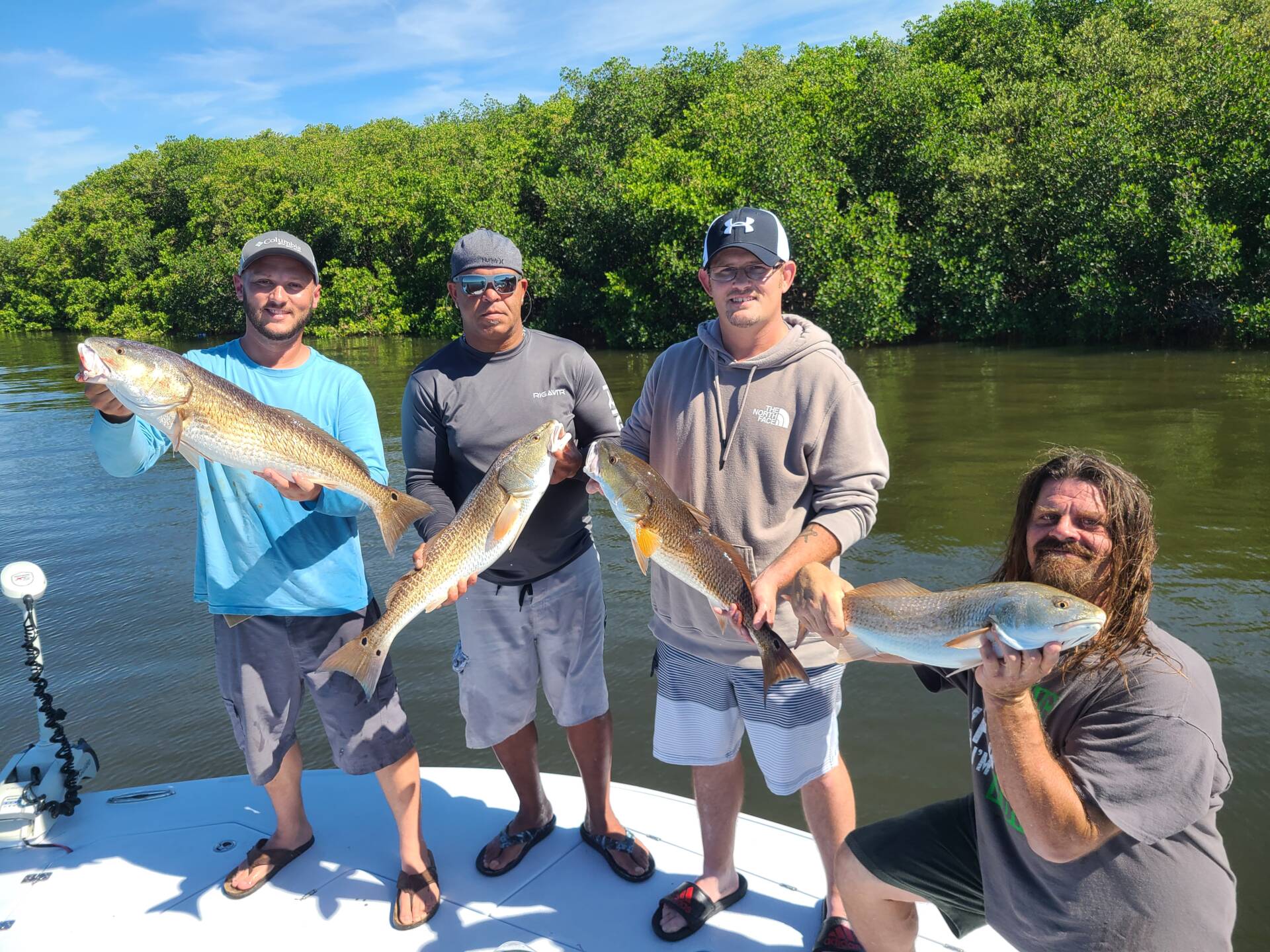
The layout of the bay gives anglers a mix of shallow flats, oyster bars, mangrove shorelines, deep channels, and spoil islands—all within short travel distances. Each structure draws different species depending on tide height, water clarity, and season.
- Redfish’ll often comb grass flats and oyster edges.
- Snook hold tight under mangrove limbs where shade and current meet.
- Trout gather along grass beds and sandy potholes where they can ambush schooling bait.
Because these habitats sit so close together, it’s easy to move between spots as conditions shift.
That combination of habitat variety and steady bait supply is what makes Tampa Bay a spot for such incredible fishing adventures. Our local system keeps the main game species present throughout the year, and each season brings its own patterns. Instead of relying on one narrow environment, anglers have an entire network of productive zones to work with.
Biodiversity at Its Best
Tampa Bay prides itself on being one of the most biodiverse bodies of water you can find. Reds, popularly known for their strong fight capabilities, to Snook—one of Florida’s premier game fish—this location has got them all.
If your goal is variety or challenge in your angling experience, look no further. The aquatic inhabitants are plenty here, giving both novice and experienced fishermen enough action throughout the year.
Ecology and Gamefish Species of Tampa Bay
Tampa Bay’s fishery stays strong because the estuary supports several layers of habitat that function together. The seagrass beds on the eastern and southern portions of the bay act as nurseries for juvenile Redfish, Seatrout, pinfish, shrimp, and a range of forage species.
Oyster bars scattered throughout the bay add hard structure that concentrates crustaceans and filters the water, which keeps clarity higher in areas with less tidal disturbance. Mangrove shorelines create shade lines, ambush points, and protection from predators, giving fish consistent places to feed and shelter as the tide shifts.
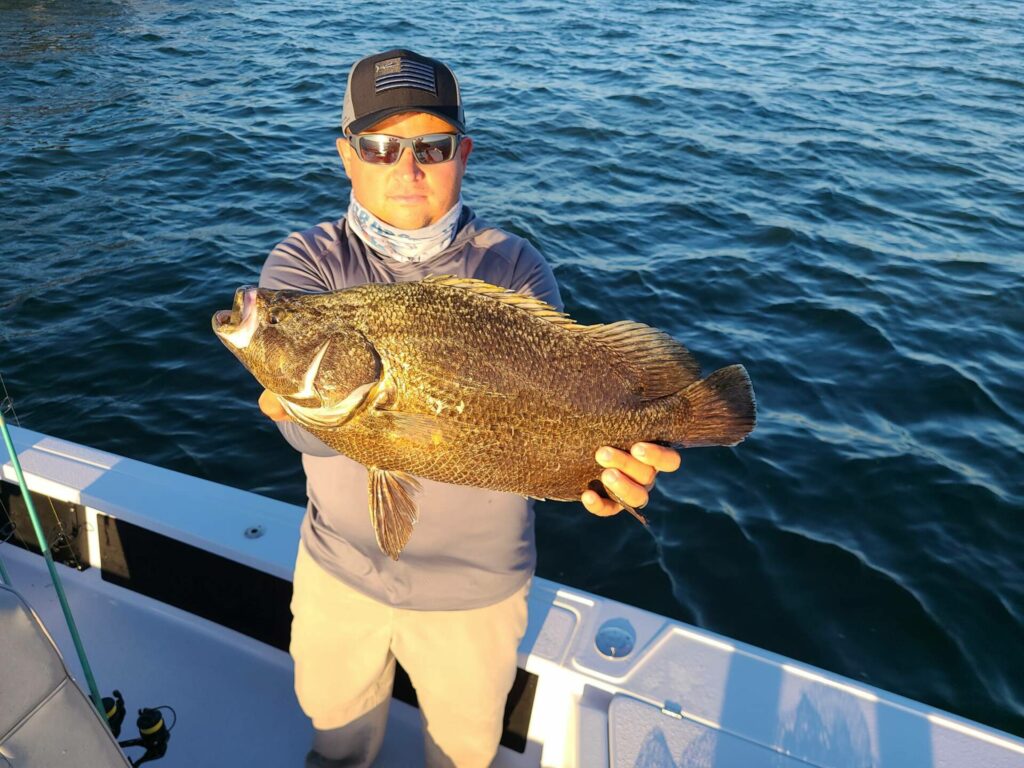
This mix of habitats allows multiple inshore game fish species to stay in the system year-round instead of migrating out when conditions change. Redfish use both shallow grass flats and deeper troughs depending on the season. Snook move between mangroves, residential docks, and bridges as temperatures fluctuate. Seatrout hold over grass beds and sandy potholes where they can feed efficiently.
Beyond the well-known species, the bay also supports sheepshead, black drum, flounder, Spanish mackerel, and other fish that take advantage of the same food sources.
Natural Features of the Estuary
The layout of Tampa Bay creates a landscape that shifts with the tides but stays consistent in its productivity. Long stretches of mangroves line much of the shoreline, and their root systems stabilize the bottom while providing shelter for baitfish and juvenile gamefish. Wide open flats allow sunlight to reach dense seagrass beds, one of the most important components of the bay’s food web. Channels, passes, and spoil islands add deeper water and strong current flow, which attracts predators during tide changes.
These features pretty much define how the fishery works. The structure holds bait, the bait draws predators, and the constant movement of water keeps the system active from season to season. The result is an estuary where anglers can target multiple species in a single outing by adjusting depth, structure, and tide.
Tampa Bay works like a living grid:
- Tides push across different sections of the flats with real force, and that movement decides where the bait stacks up.
- Wind shifts can take a shoreline that was clean in the morning and turn it murky by lunch.
- Grass thickness changes the way lures track.
- Bottom transitions — mud to sand, sand to grass, grass to potholes — act like lanes that predators sweep through when the tide gives them the right angle.
- Oyster bars tighten current and hold crustaceans.
- Mangroves cast hard-edged shade that turns into natural strike zones when the water warms.
- Grass flats don’t behave as a single piece—patches with uneven height, shell spots, or slight depressions often produce differently than the surrounding bottom.
- Tampa Bay’s productivity comes from these small details stacking together, and the fishing improves the moment those details are part of the plan.
To Summarize:
Tampa Bay is a large, nutrient-rich estuary with a mix of grass flats, oyster bars, channels, and mangrove shorelines. That combination of habitats supports year-round populations of Redfish, Snook, Seatrout, and a wide range of additional inshore species. The variety of structure and steady bait supply give the bay a level of productivity that stays stable across seasons, making it one of Florida’s top inshore fishing spots.
Experience & Local Knowledge: Captain Bucky Goldman
Bag ’em Fishing Charters is led by Captain Bucky Goldman, a long-time Tampa Bay angler who has spent decades working the estuaries, channels, and shallow flats from Central Florida to the Gulf Coast. His background includes years of guiding in Mosquito Lagoon, a technical fishery known for clear water, shallow redfish, and pressure-driven conditions. That environment requires precise casting, careful boat positioning, and a detailed understanding of how fish respond to tides and weather. Those skills transferred directly into his work on Tampa Bay, where similar conditions appear across grass flats, oyster bars, and mangrove shorelines.
On the bay, he studies how tides influence Redfish movement across edges, how Snook shift between mangrove cover and docks as temperatures change, and how Seatrout concentrate around variations in grass height or bottom composition. His approach combines live bait and artificial presentations depending on the season, clarity, and feeding patterns. That flexibility allows him to adjust quickly when conditions change, which happens often in a system as dynamic as Tampa Bay.
Working on the water daily gives him constant feedback on how the fishery is behaving. Cold fronts, freshwater inflows, algae cycles, and seagrass health all affect where fish hold from week to week. Tracking those factors over long periods builds pattern recognition that isn’t possible from occasional trips, and that’s a major part of why guided anglers experience more consistent results.
Born and raised on Florida shores, Capt. Bucky is not just familiar with the local marine life—he’s practically part fish himself! His vast knowledge of Tampa Bay’s fish species and their habits ensures that every trip out into the bay becomes a thrilling adventure.
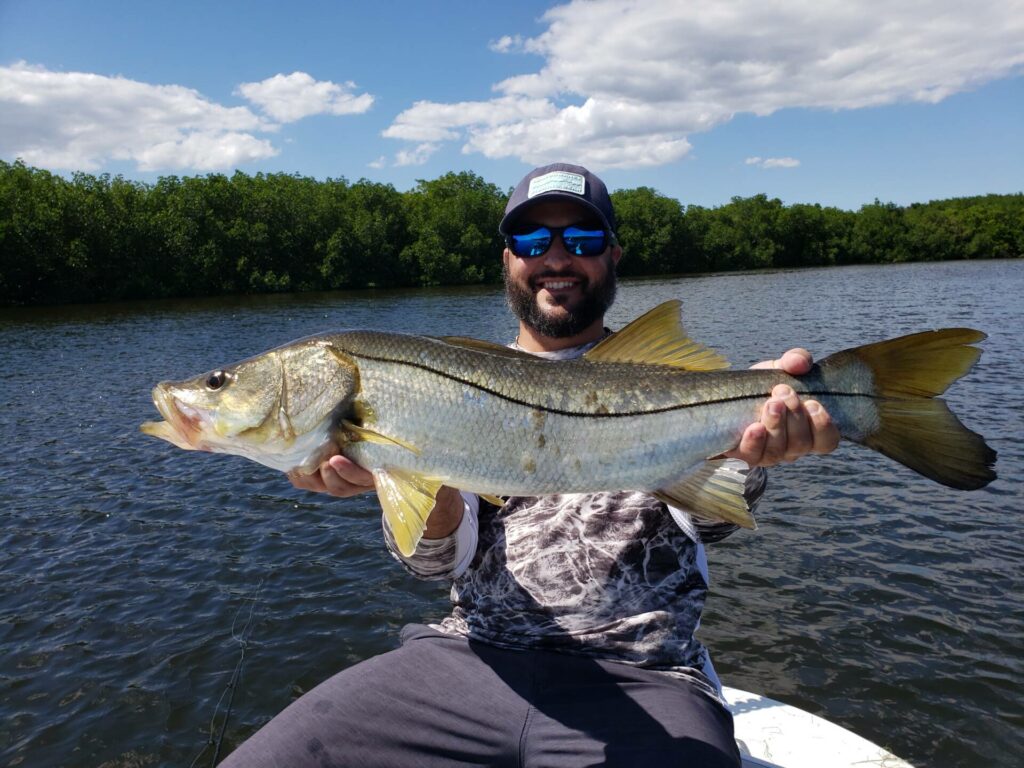
Captain Bucky structures most charters around Tampa Bay’s core inshore species: Redfish, Snook, Seatrout, and (seasonally) Tarpon. Each of these responds differently to tide height, bottom structure, and water temperature. So matching techniques to these conditions is the foundation of a productive day on the water. Over years of guiding, Captain Bucky has refined the setups, routes, and timing that line up best with each species’ behavior in the bay’s various zones. That knowledge forms the backbone of his charter work and has the real-world experience that gives fishermen a measurable advantage.
Experience Tampa Bay’s Biodiversity
Tampa Bay’s productivity comes from the range of habitats packed into a relatively small footprint. Seagrass beds cover large sections of the bay and support shrimp, pinfish, mullet, crabs, and juvenile gamefish. Oyster bars filter the water column and provide structure that attracts sheepshead, black drum, redfish, and a variety of crustaceans. Mangrove shorelines offer shade, cover, and ambush points, especially during warmer months. Channels and deeper troughs serve as travel routes for migratory species and hold predator activity when the water temperature shifts.
That combination allows multiple species to remain active throughout the year rather than relying on narrow seasonal windows.
Inshore Species Beyond “The Big 4”
While the core inshore species draw most of the attention, Tampa Bay holds a broader list of fish that respond to the same habitat features. These species appear in different zones depending on tide movement, clarity, and available forage:
- Black Drum – Often found on oyster bars and deeper edges of grass flats. They feed heavily on crabs and shrimp and require slower, more deliberate presentations.
- Mangrove Snapper – Common around structure including rocks, pilings, mangroves, and bridge fenders. They respond well to small live baits and precise placement.
- Sheepshead – Associated with barnacle-covered structure. Their feeding behavior favors crustaceans, and their bite pattern requires careful attention to tension and timing.
- Flounder – Positioned near sandy openings, channel edges, and transitions between grass and open bottom. They blend into the substrate and strike baits worked low and slow.
- Jack Crevalle – Highly mobile and fast. Schools move through the bay chasing bait, especially during periods of rising tide or glass-minnow concentrations.
- Spanish Mackerel – Active near current breaks, markers, and open-water bait pods. Their speed calls for quick retrieves and wire leaders when needed.
- Cobia – Occasionally travel along markers, rays, and channel edges. They require strong tackle due to their size and sustained power.
Tampa Bay Inshore Patterns Cheat Sheet
| Species | Best Seasons | Productive Habitat | Go-To Baits / Lures | Tide Notes | What a Good Guide Watches For |
| Redfish | Late summer–fall strongest; steady spring action | Grass flats, oyster bars, mangrove points | Live shrimp, pinfish, cut mullet; paddle tails | Rising tide pushes fish deep into mangroves; falling tide pulls them onto edges | Water clarity on flats, mullet schools, depth transitions, crab activity |
| Snook | Late spring–early fall; cold-sensitive in winter | Mangrove edges, creek mouths, docks, bridge shadow lines | Live pilchards, pinfish, jerkbaits, flair hawks | Incoming tide creates cleaner water under mangroves; outgoing tide stacks bait in choke points | Shade lines, temperature swings, outgoing vs. incoming current strength |
| Seatrout | Year-round; best early spring and fall | Mixed-height seagrass flats with sandy potholes | Live shrimp/pinfish; soft plastics; topwater at dawn | Dawn/dusk spikes; mid-tide drift over grass produces consistent bites | Grass density, bait spray, drift speed, depth changes of 6–18 inches |
| Black Drum | Fall–winter | Oyster bars, deeper grass edges | Shrimp, crabs; slow presentations | Slack-to-early incoming often best | Bottom texture, crab presence, boat quietness |
| Sheepshead | Winter–early spring | Mangroves, docks, bridges, rocks | Fiddler crabs, shrimp pieces | Accuracy > tide, but slower water helps | Barnacle growth, structure thickness, quiet presentation |
| Spanish Mackerel | Spring and fall runs | Channel edges, markers, bait pods | Spoons, jigs, small live bait | Moving water + visible bait = instant action | Bird activity, surface flashes, speed of bait |
| Jack Crevalle | Year-round movers | Anywhere bait stacks: channels, flats, seawalls | Anything that moves fast | Tide doesn’t matter much; they roam | Current pushing bait tight against structure |
| Cobia | Late spring–summer | Buoys, markers, rays, channel edges | Live pinfish, crabs, big soft plastics | Incoming tide, clearer water preferred | Shadow edges, big rays, temperature bumps |
Of course, Tampa Bay’s ecological activity extends beyond fish. The estuary supports bottlenose dolphins, manatees, mullet schools, rays, and a wide range of coastal birds. Pelicans and ospreys hunt along channel edges, while wading birds concentrate around mudflats and mangrove roots during low tide. These patterns reflect how nutrients and bait move through the system, and they often signal where predator species may be feeding.
A large portion of the bay’s productivity comes from its plant communities. Seagrass beds create the foundation of the food web, providing cover and oxygen and serving as nursery habitat for many species. Mangroves stabilize shorelines, buffer against wave action, and form root systems that shelter juvenile fish. Algal growth, water clarity, and salinity influence how these plants expand or contract from year to year, and monitoring those changes gives insight into long-term fishery health.
You might spot bottlenose dolphins frolicking nearby or manatees lazily swimming past your boat. Waterbirds like pelicans, ospreys, and herons can be seen swooping down to catch their meal from the water’s surface while turtles bask on logs, soaking up some Florida sunshine.
What About Plants?
A lot of people glaze over when the conversation shifts to plants. Fair enough—nobody loads up the boat at sunrise excited about grass species (Well, maybe if you’re a marine biologist). But here in Tampa Bay, the vegetation under the surface is one of the main reasons the fishing holds up month after month. The seagrass here builds an entire neighborhood for the smaller creatures everything else feeds on. Shrimp, crabs, pinfish, mullet, juvenile trout, juvenile reds… all of ’em spend a good part of their lives tucked into these beds. When Tampa Bay’s grass is healthy, the food chain is healthy, and the fishing follows.
The mangroves handle the shoreline side of things. Their roots catch sediment, slow down erosion, and create miles of pockets, shade lines, and tight ambush points. Snook slide under the overhangs on warm days. Redfish work the edges when the tide climbs high enough for them to push deep into the roots. Snapper stack up around the thicker tangles. It’s all connected, and if you understand how those shorelines “breathe” with the tides, you can predict where fish will move next.
Both seagrass and mangroves shift a little from year to year. More freshwater, less freshwater, storms, hot summers—all of it shows up in the plants first. Tracking how seagrass coverage expands or contracts from year to year gives you info about forage availability, fish distribution, and other patterns throughout the bay.
To Summarize:
Bag ’em Fishing Charters works the same waters where Tampa Bay’s fishery builds its strength—grass flats, mangrove edges, oyster bars, and channels that hold fish through every season. Captain Bucky Goldman’s many years of first-hand experience on this bay gives him a good read on how the tides, weather, and bait movement shape each day, and that’s the foundation for the trips he runs. Most outings focus on the core inshore species, but the bay’s broader mix of drum, snapper, flounder, jacks, mackerel, and other fish adds plenty of variety when conditions shift. The draw isn’t just the species list; it’s the chance to work a complex estuary with someone who knows how it behaves.
Fishing With Bag ’em: What a Day on the Water Actually Looks Like
A day on Tampa Bay starts with simple prep. Licenses and regulations are already covered under the captain’s credentials, so there’s no paperwork to sort through before leaving the dock. Gear is rigged ahead of time, bait is ready, and the plan for the trip is built around tide movement, wind, and the best zones for the species in season.
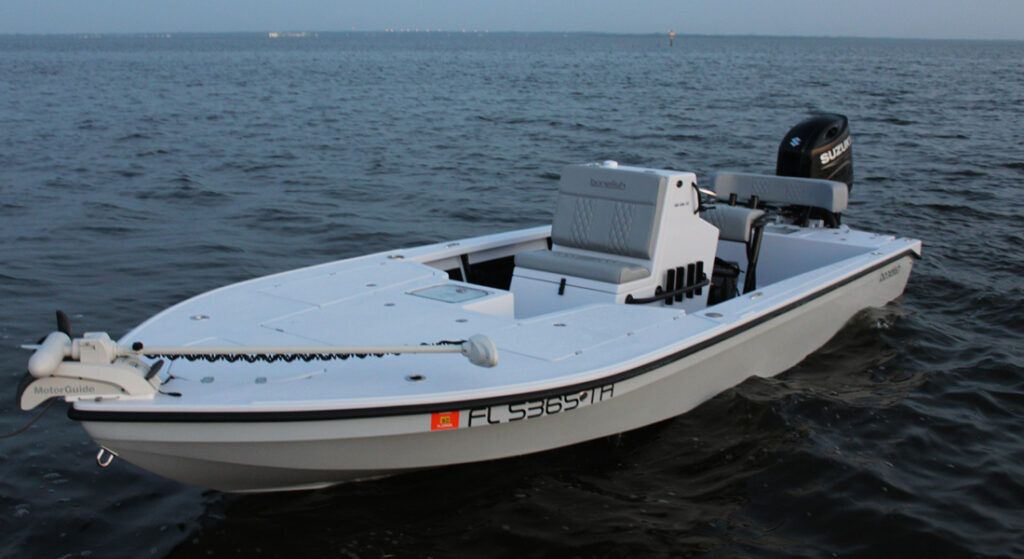
On the boat, everything is set up to make the day straightforward. The tackle is tuned for inshore fishing, and the layout keeps the deck clear so moving around during a bite is easy. Electronics handle the navigation and mapping, but most of the decision-making still comes from time spent learning how the bay behaves. The tools help, but the real value is knowing when a shoreline is worth fishing and when it’s time to make a move.
Comfort and safety matter on fishing any charter, and that’s perhaps doubly true when the weather shifts. The boat carries the required communication equipment and safety gear, and the ride is stable enough for open stretches of the bay as well as the shallower areas along the mangroves and grass flats. Seats and shade give everyone a break between spots, which is useful on longer sessions or hot summer days.
Charter trips like this are built around reading conditions as they change. If the wind pushes bait onto a shoreline, the route may adjust. If a tide is late or the water clarity drops, a different flat or deeper trough may make more sense. The idea is o have steady, productive day that follows the natural day-to-day changes of Tampa Bay rather than sticking to a fixed script.
To Summarize:
A day on the water with Bag ’em is built around a straightforward setup: licensing is covered under the captain’s credentials, the gear is prepared ahead of time, and the boat carries the safety equipment and tools needed for inshore work. The layout of the vessel, the tackle choices, and the approach to each spot are designed to match the conditions on Tampa Bay’s flats, channels, and mangrove shorelines. The focus stays on fishing the bay’s structure efficiently while letting the equipment and planning handle the background details.
What type of fish can I expect to catch on a Tampa Fishing Guide charter?
You can anticipate catching various inshore species on a Tampa Fishing Guide charter. The common catches include Snook, Redfish, and Spotted Seatrout, the primary targets for most anglers. Additionally, other potential catches encompass Sheepshead, Flounder, and Spanish Mackerel, depending on the season. Tarpon fishing is also offered during its migration period for those seeking bigger challenges.
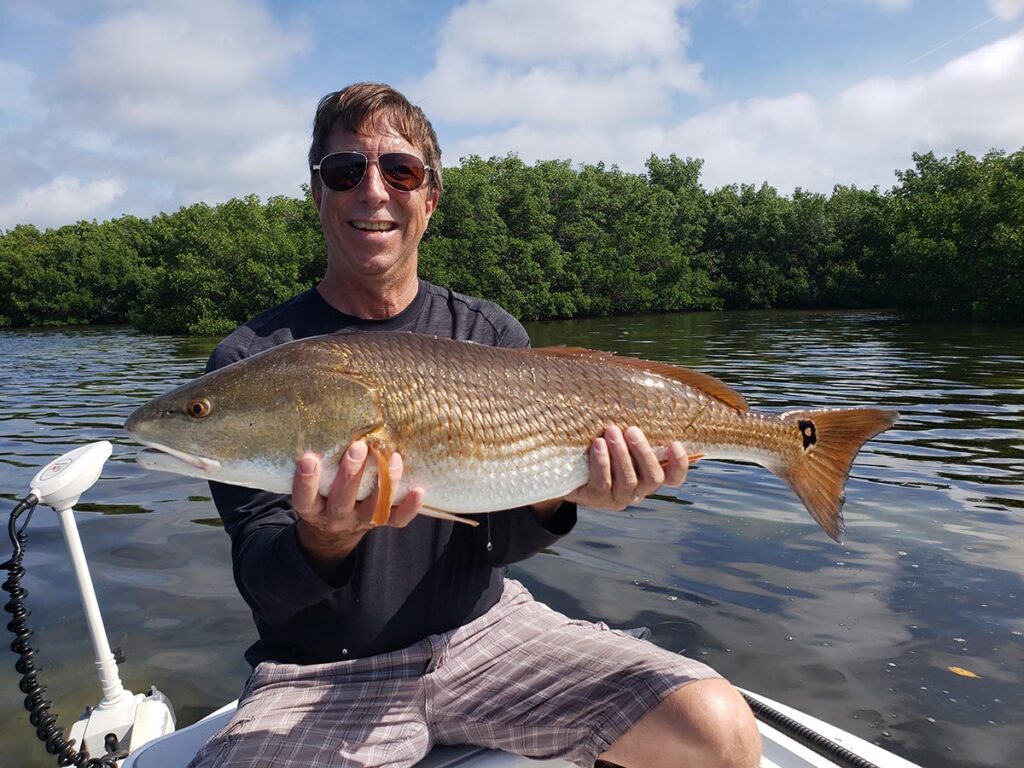
Targeting Redfish in Tampa Bay
If you’re a fishing enthusiast, there’s no place quite like Tampa Bay. This saltwater haven is home to many marine life, making it an angler’s paradise. Among the diverse species that call these waters home, one fish stands out – the mighty Redfish.
The Fall Season – A Redfish Bonanza
Come fall season, Tampa Bay becomes a hub for red drum anglers. The dropping water temperature signals bait fish such as mullet and shrimp to migrate from estuaries towards open waters. This migration creates a buffet line that attracts schools of ravenous Reds ready to bite your hook.
This period has seasoned fishermen swapping tales about their biggest catches around campfires or over bar counters because when it comes down to reeling in big Reds during this time – it’s akin to hitting gold at sea!
To maximize your chances during this bonanza time – live bait reigns supreme. Nothing beats rigging up juicy mullets or fingerling pinfish under popping corks or on bottom rigs near mangrove edges where these feisty fighters love lurking.
Picking Your Spot Wisely
Increase your odds against our crimson quarry by focusing on shallow grass flats rich with food-rich sediment for smaller prey species like crabs and shrimps – essentially ringing dinner bells for those bronze bruisers we lovingly call Redfish.
- Your key stat here: ideal depth ranges between 1-3 feet deep (or shallower).
- Remember: every flat is unique, so don’t be afraid to experiment until you hit gold.
Bag ’em Fishing Charters and our experienced guide, Captain Bucky Goldman, can help you navigate these waters to find the perfect spot. With years of experience fishing in Tampa Bay, he knows exactly where those Redfish are hiding.
With Bag ’em Fishing Charters, your next big catch is just a cast away!
To Summarize:
Experience the thrill of Tampa Bay’s fall Redfish bonanza, using live bait near mangrove edges to bag these feisty fighters. Boost your odds by targeting shallow grass flats, and remember, each flat is unique – don’t hesitate to try different spots until you strike gold.
Snook Fishing Adventures
There’s nothing quite like the thrill of Snook fishing in Tampa Bay. These elusive gamefish are known for their powerful runs and dogged determination, offering a challenge to even the most seasoned anglers.
Tampa Bay is a prime location for Snook. The extensive estuary system creates an ideal habitat with plenty of food sources, making it one heck of a spot to get your line wet.
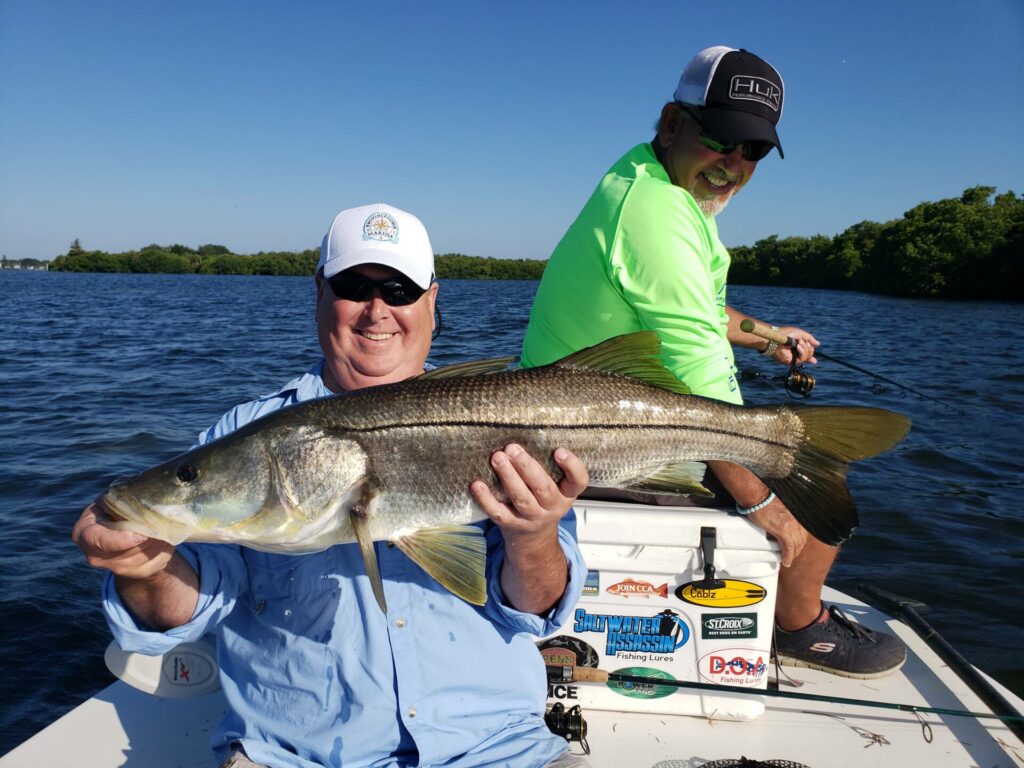
Late Spring to Early Fall – The Snook Season
Finding the right time is essential when targeting these tenacious fighters. Late spring through early fall proves fruitful due to warming waters triggering active feeding patterns in Snooks. During this period, they’re often found patrolling mangrove shorelines or grass flats hunting prey—making them easier targets for skilled fishermen.
According to the Florida Fish and Wildlife Conservation Commission, during peak season (which typically starts around late May), there’s an influx in snook population throughout Tampa Bay waters—a testament backed by many avid anglers’ personal experiences.
If you’re wondering how Bag ’em Charters can help you experience this exhilarating pursuit first-hand? Well, let me tell you.
Snook Fishing Charters in Tampa Bay
We’ve been navigating these parts longer than most, and our Captain knows every nook and cranny of Tampa Bay waters. So you bet we know where the Snook are hiding. We take pride in helping anglers hook up with these fierce fighters while providing a fun, safe environment.
Our fishing gear? Top-notch. Our crew understands that suitable equipment is crucial for success when targeting species as powerful as Snook. You can count on us to provide quality tackle that’ll withstand any fish’s powerful strike.
So, if you’re chasing that adrenaline kick by taking on one of Tampa Bay’s toughest challenges…
To Summarize:
Experience the thrill of a lifetime chasing Snook in Tampa Bay. These feisty gamefish give you both challenge and excitement. Your best shot at peak action is from late spring to early fall. At Bag ’em Charters, we’re all set to lead your thrilling expedition – our seasoned Captain knows all the hot spots.
The Year-Round Attraction – Seatrout
When it comes to fishing in Tampa Bay, one species consistently stands out among the rest: the feisty and ever-present Seatrout. This spotted wonder is known for its spirited fight, providing thrill-seekers a year-round opportunity to test their angling skills.
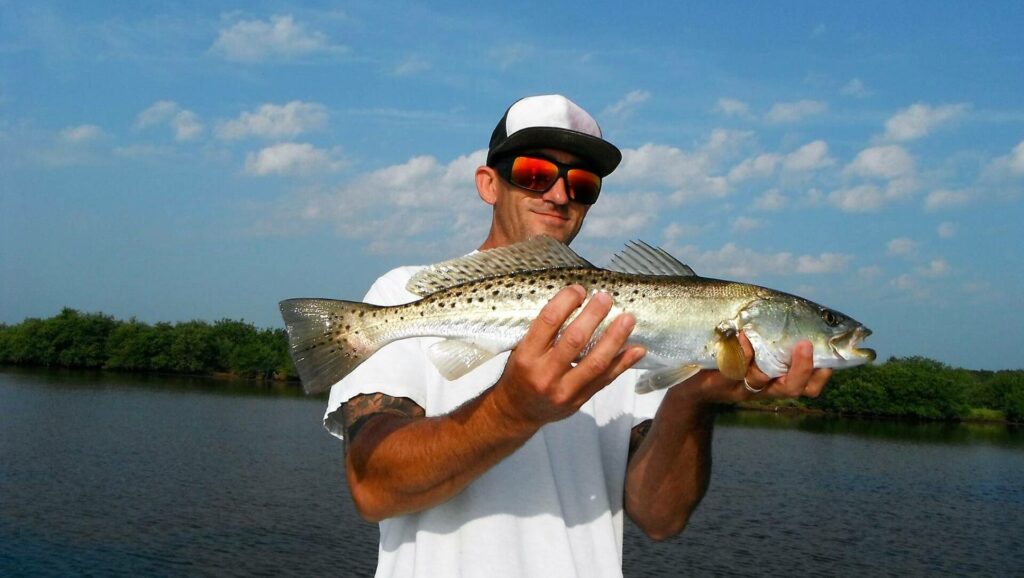
Luring the Spotted Sea Trout
What sets these fish apart? They’re not picky about where they hang out. Whether you’re exploring shallow flats or deeper channels, there’s a good chance you’ll find some Seatrout action. According to The Florida Fish and Wildlife Conservation Commission, using live shrimp or pinfish as bait can significantly up your odds of hooking one.
To get them biting, though, understanding their feeding patterns is vital. As dawn breaks and dusk falls, these creatures feed aggressively – making those times prime opportunities for an exhilarating battle on your line. Try casting near seagrass beds; this habitat tends to be a favorite hunting ground for hungry trout.
- Fish at dawn or dusk when Seatrouts are most active.
- Casting live baits such as shrimp near seagrass beds enhances success rates.
- Understanding the species’ preferred habitats aids in locating schools of fish.
Catch Your First (or 50th) Seatrout With Bag ’em Fishing Charters!
Now Tampa Bay holds Seatrout through much of the year, and the patterns that produce fish stay fairly consistent across its grass flats and sandy openings. Productive areas often have a mix of cover and open bottom, with steady tidal flow carrying shrimp, small baitfish, and pinfish across the grass. Early and late light usually brings the strongest activity, especially when the tide is moving and the water has enough clarity for the fish to feed confidently.
On charters, the setups match the conditions. That can mean live shrimp or pinfish on light tackle when the fish are holding tight to the grass, or soft plastics when they’re spread out across a flat. The captain watches how the tide angle, depth, and drift speed line up, and the boat adjusts to keep baits or lures moving naturally through the strike zone.
The gear, bait, and positioning should obviously shift as needed, but the approach, overall, stays simple: read the flat, use the tide, and keep presentations in the lanes where trout feed most reliably. Tampa Bay’s mix of grass height, potholes, and current lines gives plenty of room to work, and small changes in boat angle or drift direction often make a noticeable difference.
A Few Final Tips for Trout Fishing Trips in Tampa:
Seatrout stay active in Tampa Bay throughout the year, and their movements follow predictable patterns tied to tide strength, grass density, and light levels.
Most reliable activity develops on grass flats with a mix of short and medium-height vegetation, especially where sandy openings create clear ambush points.
Dawn and dusk often bring the heaviest feeding, but mid-tide periods can be productive when the current pushes shrimp and small baitfish across the flat.
Live shrimp, pinfish, and soft plastics all work, but the choice between ’em depends on water clarity, depth, and how tightly the fish are holding to the bottom. Subtle changes in drift speed, casting angle, or bait depth can shift the bite, and reading those details is a big part of working the bay’s trout patterns effectively.
A guided trip (i.e. fishing charters) adds some structure to targeting local gamefish by pairing the day’s tide cycle and weather with the flats most likely to produce. The approach centers on understanding how trout use seagrass, current seams, and bottom transitions, then adjusting the spread and presentation as the conditions evolve.
Tampa’s Top Fishing Adventures
Tampa Bay’s reputation as a dependable inshore fishery comes from how the estuary is built. Seagrass beds, mangrove shorelines, oyster bars, and steady tidal flow all work together to hold fish through every season. Redfish, Snook, Seatrout, and seasonal Tarpon rely on these areas for food and cover, along with drum, snapper, mackerel, and the other species that move through the bay as conditions shift. Anyone who spends time on this water knows that reading these pieces of habitat is the key to fishing it well.
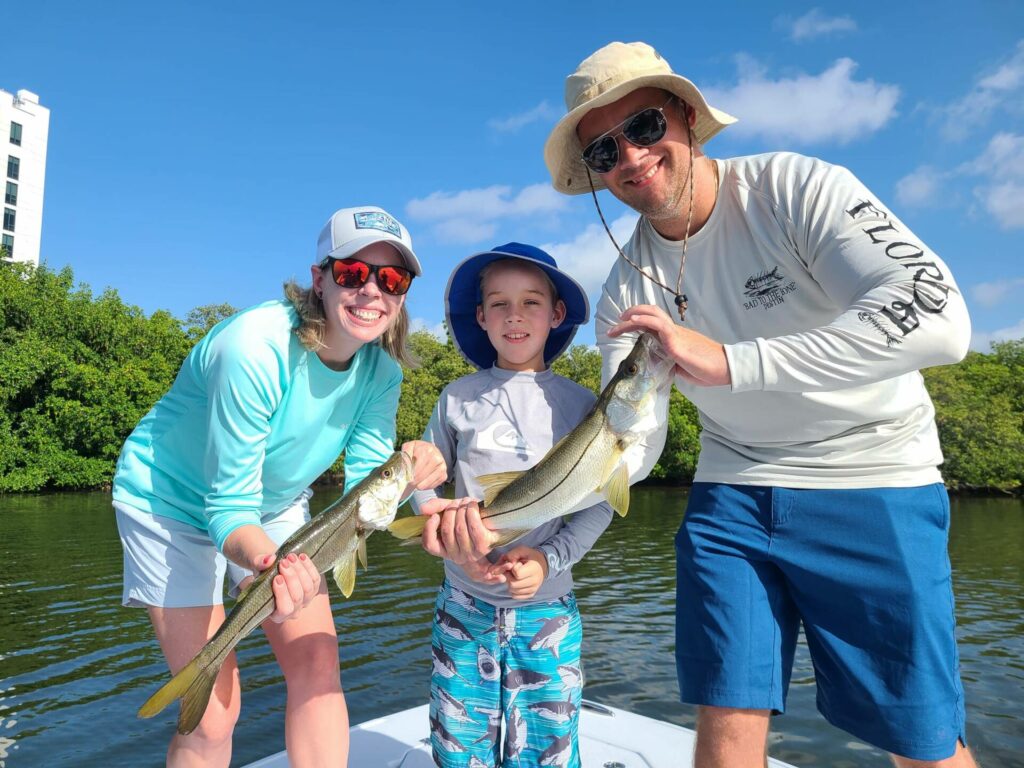
Guides who work the bay every day pay attention to the details that matter — how the tide stacks up on a shoreline, how wind changes water clarity, where bait pushes on a rising tide, and which flats stay productive when temperatures start to swing. That’s the background behind Captain Bucky Goldman’s approach. Years of captaining fishing trips on these routes give him a clear sense of how the bay behaves from season to season, and that shapes the decisions he makes on the water.
This guide walked through the main species, the habitats they rely on, and the practical factors that influence where they show up and how to target them. For anglers trying to understand what makes Tampa Bay fish so consistently — or comparing local guides who know the area — these patterns are the foundation. Strong days on the bay usually come from matching the tide, choosing the right water, and adjusting techniques as the conditions change. It’s a system that rewards good timing, steady preparation, and a little flexibility when the bay starts doing something different.
So what are you waiting for? Experience first-hand the adrenaline-packed excitement that await in the clear waters of Tampa Bay—one of Florida’s premier fishing destinations.
Ready to head out on the water? Book your trip today!