Last Updated on September 10, 2026 by Eric
September fishing in Tampa Bay brings together late-summer action and the first stages of the fall inshore season. Redfish become a major focus around the flats and mangrove shorelines, snook remain active wherever current delivers bait to cover, and spotted seatrout provide opportunities over grass and sandy potholes. The weather may still feel like summer, but there is plenty to look forward to on the water.
At Bag’Em Fishing Charters, we build our Tampa Bay inshore fishing trips around the tide, available bait, water conditions, and the experience level of the anglers aboard. September is a good month to fish live bait with the family, work artificial lures along a shoreline, or concentrate on a particular inshore species with Captain Bucky.
The most important part of planning a September trip is keeping expectations tied to the conditions. Early fall does not arrive everywhere in the bay at once. Some mornings still call for summer tactics, while changing weather and bait movement create opportunities to explore a different stretch of shoreline or a new section of the flats.
What Changes in Tampa Bay During September?
Much of the approach that works during August fishing in Tampa Bay remains useful in September. Early starts, shade, moving water, and nearby depth still matter, especially during warm stretches. There is no reason to abandon productive summer water simply because the calendar has changed.
What makes September interesting is the overlap. Redfish can gather into groups as the fall pattern develops. Snook may be spread between summer holding areas and shorelines farther inside the bay. Bait concentrations give us reasons to check grass edges, oyster bars, creek mouths, and channel transitions rather than fishing the same location throughout the entire trip.
September also brings an important regulatory change: the fall snook harvest window opens in the Tampa Bay management region under current rules. That creates additional interest in snook fishing, although catching and releasing these fish remains an excellent reason to book a trip regardless of whether harvest is open.
Best Inshore Fish to Target in September
Redfish Around Flats, Mangroves, and Oyster Edges
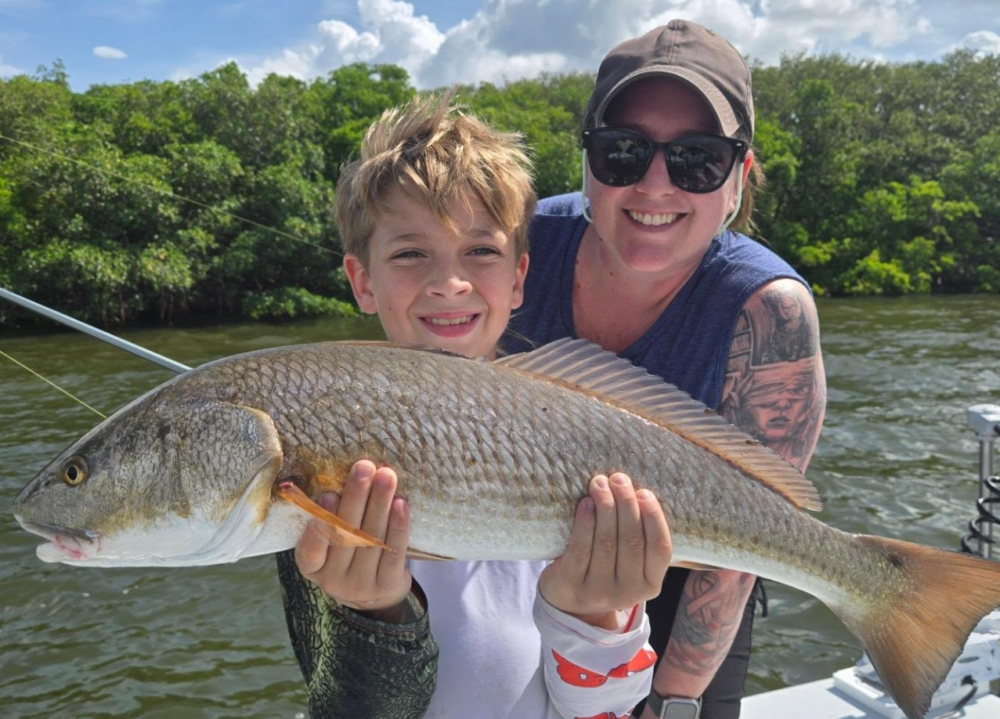
September is a month to put redfish fishing in Tampa Bay near the top of your list. The combination of shoreline cover, shallow feeding areas, and nearby channels gives redfish plenty of places to move as the tide changes.
Higher water can let fish push underneath mangrove overhangs and across shallow grass. As water falls, look toward the outside edges of those areas: sandy cuts, small drains, oyster bars, and depressions that remain accessible after the surrounding flat gets too shallow.
Finding a group of redfish is only part of the job. Boat positioning and the first few casts can determine whether those fish keep feeding or move away. We want a bait or lure to arrive ahead of the fish, not land directly on their backs. Staying outside the school and allowing fish to move into casting range is usually a better approach than repeatedly chasing them.
Live shrimp, small baitfish, and cut bait all have a place. Gold spoons, weedless soft plastics, and shrimp imitations give anglers another way to cover likely water. When fish are visible but reluctant to chase, a quieter presentation and a slower retrieve are worth trying before changing locations.
Schooling fish are an opportunity, not a guarantee. Individual redfish and smaller groups around productive shoreline cover can make a September trip just as worthwhile.
Snook Around Current, Shade, and Feeding Lanes
A productive day of Tampa Bay snook fishing often starts with identifying where current meets cover. Mangrove points, dock pilings, bridge edges, and creek mouths give snook a place to hold while bait passes within striking distance.
September can find fish using several different types of habitat. Some remain near passes and other summer areas, while others work shorelines, canals, and creek entrances inside the bay. We pay attention to bait and water movement rather than assuming every snook has already shifted into a fall location.
During lower light, topwater plugs can be an exciting way to fish open edges. As the sun rises, a shrimp imitation, soft plastic, or live bait placed close to shade may be a better choice. Casting accuracy matters around cover, but so does the angle: a presentation that travels naturally with the current usually stays in the feeding lane longer.
Once a snook is hooked, the nearby structure becomes the immediate concern. Appropriate tackle, a sound leader, and steady pressure help keep the fish away from roots and pilings. We encourage catch-and-release snook fishing, including during the open season, with careful handling and brief photo stops.
Spotted Seatrout Over Grass and Sandy Potholes
Our spotted seatrout fishing gives September anglers a chance to work a different part of the bay. Instead of placing every cast against shoreline cover, we can fish grass beds, sandy openings, and the edges where flats drop toward deeper water.
A pothole is simply a sandy opening within the grass. These openings, along with changes in depth and grass coverage, are useful places to focus presentations. On warmer days, deeper grass and nearby channels remain worth checking even when the calendar says fall is approaching.
Live shrimp beneath a popping cork can keep a bait above the grass while making the bite easier to recognize. Soft-plastic jigs and suspending twitch baits let anglers search different depths and retrieve speeds. Once we locate a productive section, controlled drifts help us work it again without repeatedly driving over the fish.
Trout require gentle handling. Supporting the fish, avoiding unnecessary contact with dry surfaces, and returning unwanted or undersized fish promptly helps protect an important part of Tampa Bay’s inshore fishery.
Black Drum, Mangrove Snapper, and Mixed-Bag Opportunities
Redfish, snook, and trout are the main focus, but keeping an open mind can add variety to the trip. Black drum may feed around oyster bars, dock pilings, and deeper structure, where shrimp or pieces of crab presented near the bottom can be effective.
Mangrove snapper around hard structure and jack crevalle following bait can also create worthwhile opportunities. These encounters are a reason to stay observant between planned stops. A shoreline holding feeding activity may deserve attention even when it is not producing the species we originally expected.
How to Fish September Tides in Tampa Bay
Choosing between an incoming and outgoing tide is less useful than understanding what each tide does to a particular spot. A shoreline that needs higher water may fish poorly during the same outgoing tide that makes a nearby drain productive.
We look for a combination of access, food, and a presentation the fish can reach. More current is not automatically better if the bait races past the target or the lure cannot stay at the right depth.
| Water Condition | Where to Focus | Presentation Adjustment |
|---|---|---|
| Incoming water covering the shallows | Mangrove edges, oyster bars, and grass flats that become accessible as water rises. | Work toward newly flooded cover and place baits ahead of feeding fish. |
| Higher water along the shoreline | Overhanging mangroves, shaded pockets, and shoreline points with nearby depth. | Prioritize accurate casts close to cover rather than covering only open water. |
| Falling water draining the flats | Creek mouths, sandy cuts, potholes, and the outside edges of shallow feeding areas. | Present baits where water carries forage out of the shallows. |
| Little tidal movement | Areas still showing bait, feeding activity, shade, or a useful depth change. | Work promising cover carefully and reassess before spending too long in inactive water. |
A good September plan leaves room to change locations as the water changes. We may begin along a shoreline, shift to a draining edge, and finish over grass rather than trying to make one spot produce through every stage of the tide.
Live Bait or Artificial Lures in September?
Live Bait for Families and Mixed-Experience Groups
Live-bait fishing is a practical choice when the group includes children, first-time anglers, and experienced fishermen on the same trip. It allows us to concentrate on bait placement, recognizing bites, and fighting fish without requiring everyone to master a particular lure retrieve.
Our live-bait trips are prepared around the day’s fishing opportunities. Natural bait can be especially useful when fish are holding in a defined area and need a presentation that stays close to them. We can adjust the rig and bait placement as we move between shoreline cover and more open water.
Artificial Lures for Anglers Who Enjoy Casting
Our Tampa Bay artificial-lure fishing trips are a good fit for anglers who enjoy making repeated casts, reading the water, and changing presentations. Captain Bucky fishes a range of soft plastics, shrimp imitations, spoons, twitch baits, and topwater lures rather than relying on one presentation for every situation.
A paddletail is useful for searching grass edges and open pockets. A shrimp imitation can be worked more deliberately around mangroves or docks. A suspending twitch bait gives anglers a way to pause the lure near fish instead of pulling it straight through the area.
The important adjustments are often practical ones: changing the lure’s running depth, slowing the retrieve, improving the casting angle, or reducing how much disturbance the presentation makes. September offers opportunities to work on those details without assuming the fish will chase anything placed in front of them.
Artificial-focused trips are best suited to anglers comfortable with casting, and we recommend one to three anglers for this style of fishing. Let us know before booking when learning or fishing a particular technique is a priority.
September 2026 Fishing Regulations for Tampa Bay
The following summary applies to the Tampa Bay management region under current 2026 rules. Regulations are regional and can change, so review the linked Florida Fish and Wildlife Conservation Commission regulations before your trip.
| Species | September Harvest Status | Size and Daily Limits |
|---|---|---|
| Snook | Open during the September 1 through November 30 fall season. | 28 to 33 inches total length; one fish per person per day. |
| Redfish | Open year-round. | 18 to 27 inches total length; one fish per person per day, with a two-fish vessel limit. |
| Spotted seatrout | Open year-round. | 15 to 19 inches total length; three fish per person per day. One fish over 19 inches may be kept per vessel, included within the bag limit. |
Captain and crew may not retain a bag limit for these species while on a for-hire trip. Fish outside the applicable legal size limits must be released, subject to the stated seatrout exception. An open season does not guarantee a legal-sized catch, and catching and releasing fish remains a rewarding way to enjoy the trip.
September Weather and the Early Fall Transition
September is not a dependable shortcut to cool, dry weather in Tampa Bay. The National Weather Service identifies July through early September as the peak of the region’s rainy season, followed by a more variable wind-down period from mid-September into early October. Tropical systems and early fronts can affect that transition.
That makes morning departures a useful starting point, but not a guarantee of storm-free conditions. We consider the forecast, wind, lightning risk, and the route back to the ramp when planning the trip. Inshore fishing offers different areas to consider, but unsafe weather still requires changing or postponing the plan.
The local thunderstorm season overview provides useful background. For fishing, the practical takeaway is to stay flexible: work summer patterns while the water remains warm, then adjust as conditions support more of the early fall fishing pattern in Tampa Bay.
What to Bring on a September Fishing Charter
Pack for sun exposure, warm temperatures, and the possibility of rain. Keeping personal gear compact makes it easier to move around the boat and keep important items protected.
- Sun protection: Bring a hat, polarized sunglasses, sunscreen, and a lightweight sun-protective shirt.
- Personal essentials: Pack food, preferred drinks, necessary medication, and a small waterproof bag for valuables.
- Weather-appropriate clothing: Bring rain gear and wear suitable non-marking footwear. Avoid boots and dark-soled shoes.
We provide fishing gear, tackle, live bait for live-bait trips, iced bottled water, and towels. Guests fishing aboard the charter are covered by the captain’s fishing license, with coverage for up to four anglers. Check our fishing charter FAQs for additional preparation details.
September Tampa Bay Fishing FAQs
Is September a good month for fishing in Tampa Bay?
Yes. September offers opportunities for redfish, snook, spotted seatrout, and other inshore species. It is a transition month, so productive fishing depends on matching the day’s tide, bait, and weather rather than expecting fully developed fall conditions every morning.
Can we focus on redfish or snook instead of a mixed catch?
Yes. Tell us about your preferred target when arranging the trip. We can discuss a species-focused approach while keeping realistic expectations about weather, fish location, and feeding activity. A preferred target helps shape the plan, but no particular catch is guaranteed.
Are September trips suitable for children and beginners?
Yes. Our live-bait inshore trips welcome anglers of different ages and experience levels. Tell us the ages of any children when booking so we can prepare appropriate safety gear and discuss a trip that fits the group.
Where do fishing trips depart from?
We use several ramps depending on the fishing and weather. Two common departure locations are the Courtney Campbell Causeway Boat Ramp and the Gandy Boulevard Boat Ramp. Captain Bucky confirms the meeting location and directions before the trip.
What time should we arrive?
Start times vary with the season and tides and are discussed before your charter. Plan to arrive at least 15 minutes early so there is time to load the boat without cutting into the trip.
Book a September Fishing Trip With Bag’Em Fishing Charters
September gives us several ways to enjoy Tampa Bay: working a shallow edge for redfish, placing a bait beside snook cover, or fishing grass and potholes for trout. The best trip is the one that matches those opportunities to the anglers aboard.
We offer live-bait and artificial-lure fishing with Captain Bucky, with the approach tailored to your goals and the conditions. Browse our Tampa Bay fishing reports and seasonal articles for more from the water, then choose a date that works for your group.
Plan your September fishing trip: Check charter availability and book online, call or text 407-977-7650, or contact Captain Bucky to discuss target species, fishing style, and trip details.