Last Updated on August 13, 2026 by Eric
August fishing in Tampa Bay is late-summer inshore fishing at full volume: warm water, active bait, early bite windows, fast-changing weather, and fish that reward anglers who move with the conditions instead of arguing with them. The best days are built around low light, strong tide movement, clean water, shade, and bait-heavy areas.
For anglers planning Tampa Bay inshore fishing charters, August can produce snook, redfish, spotted seatrout, mangrove snapper, tarpon, jacks, ladyfish, Spanish mackerel, black drum, and other mixed-bag action. The trick is timing the trip around the best tide window and staying flexible as heat, storms, boat traffic, and water clarity change throughout the morning.
If you are comparing August with July fishing in Tampa Bay, the overall summer pattern is similar, but August starts leaning toward the early fall transition. Redfish become a bigger part of the conversation, snook remain active but harvest is still closed, trout hold better over deeper grass, and structure fishing can save the day when exposed flats get too hot.
What August Changes in Tampa Bay
August is still summer, so the day usually starts with heat management. The first productive window often happens from sunrise through mid-morning, especially when that period overlaps with strong incoming or outgoing water. Once the sun climbs, fish often slide toward shade, deeper grass, bridge shadows, mangrove edges, channel drains, and structure with current.
| August Variable | Typical Pattern | Fishing Impact | Best Adjustment |
|---|---|---|---|
| Water temperature | Shallow flats warm quickly after sunrise. | Fish may feed early, then become harder to tempt in exposed shallow water. | Start shallow when conditions allow, then move toward shade, deeper grass, channels, docks, or bridges. |
| Tide movement | Incoming and outgoing water concentrates bait around points, drains, bridges, oyster bars, and mangrove edges. | Predators position where current delivers food instead of roaming randomly. | Build the trip around moving water rather than simply picking the longest available time slot. |
| Bait concentration | Pilchards, pinfish, threadfins, shrimp, crabs, mullet, and small baitfish remain major drivers. | Snook, redfish, trout, snapper, tarpon, jacks, and mackerel stay close to reliable food. | Look for flipping bait, birds, nervous water, surface showers, and predators pushing bait before settling in. |
| Rain and runoff | Repeated summer rain can change salinity, clarity, and water color. | Fish may shift away from dirty runoff and toward cleaner water or stronger tidal exchange. | Pay attention to water color and do not assume last week’s best shoreline will fish the same way today. |
| Afternoon storms | Late-summer thunderstorms can develop quickly across West Central Florida. | Lightning and wind changes make afternoon plans less dependable. | Favor early starts and keep the route flexible. The atmosphere occasionally throws a tantrum, because Florida. |
| Boat traffic | Popular flats, bridges, channels, islands, and sandbar areas can get busy. | Shallow fish may become harder to approach once pressure builds. | Fish first light, approach quietly, and avoid repeatedly driving over productive water. |
The main August rule is simple: fish the strongest window, stay near active bait, and move when the water stops showing life. Sitting on empty water because it “should” be good is not strategy. It is just stubbornness with sunscreen.
- Primary August targets: Snook, redfish, spotted seatrout, mangrove snapper, tarpon, jack crevalle, ladyfish, Spanish mackerel, black drum, and mixed inshore species.
- Primary habitats: Mangrove shorelines, grass flats, potholes, oyster edges, tidal drains, bridges, docks, seawalls, passes, channels, and bait-heavy open water.
- Primary natural baits: Pilchards, pinfish, threadfins, shrimp, crabs, mullet, and cut bait.
- Primary artificial lures: Topwater plugs, paddletails, weedless soft plastics, twitch baits, spoons, shrimp imitations, and small jigs.
- Best general window: Sunrise through mid-morning, especially when low light overlaps with a strong incoming or outgoing tide.
Five Productive August Fishing Patterns
Catch-and-Release Snook Around Current and Shade
Snook remain one of the best August targets in Tampa Bay. During late summer, they may feed around mangrove points, dock lines, bridge shadow lines, passes, beach edges, tidal drains, creek mouths, and channel cuts where current sweeps bait past structure.
At first light, snook often feed more openly along outside edges, shallow points, and current seams. As the sun rises, shade becomes more important. Mangrove overhangs, dock shadows, bridge pilings, and deeper cuts can all hold fish after exposed water gets bright and hot.
Live pilchards, pinfish, and shrimp can produce when fish are feeding aggressively. Artificial options include paddletails, twitch baits, topwater plugs, jerkbaits, and shrimp-style lures placed close to cover. Around mangrove roots and bridge structure, anglers need to react quickly. A hooked snook does not politely ask permission before trying to turn your leader into dental floss.
Our guide to Tampa Bay snook fishing covers more about the species, habitat, and why snook are such a popular local target.
As of the current 2026 FWC regulations, recreational snook harvest in the Tampa Bay management region is closed from May 1 through August 31. Snook can still be targeted during August, but they must be released. Regulations can change, so review the current Florida snook regulations before fishing.
Redfish on Mangroves, Oyster Edges, and Late-Summer Flats
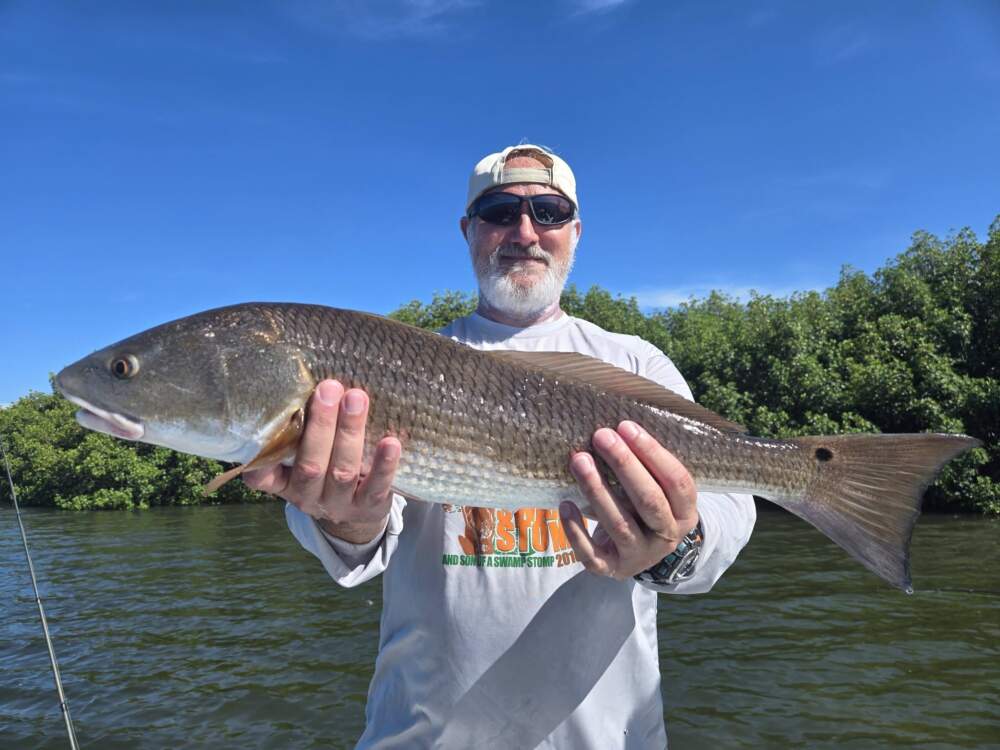
August is an excellent month to start paying closer attention to redfish. Tampa Bay redfish may feed along mangrove shorelines, oyster edges, grass flats, potholes, creek mouths, and sandy transitions where food gets pushed by the tide.
Higher water can push redfish tight to mangroves and shoreline cover. Falling water can pull those same fish toward drains, potholes, oyster edges, and the first available depth change. That makes tide stage one of the most important redfish clues in August.
Live bait, cut bait, weedless paddletails, spoons, shrimp imitations, and soft plastics can all produce. Cut bait is especially useful when redfish are holding in a small area but do not want to chase. Artificial lures are better when the goal is to cover water and locate scattered fish.
Quiet boat control matters. Redfish in warm, shallow water can feel pressure, hull slap, trolling-motor noise, and bad casting angles before the angler ever sees them. Set up outside the target zone, make longer casts, and let the tide work for you instead of barging in like a raccoon with a leaf blower.
For a deeper species breakdown, visit our Tampa Bay redfish fishing page.
Current FWC regulations list the Tampa Bay redfish region as open year-round with an 18 to 27 inch slot limit, a 1-fish per-person daily bag limit, and a 2-fish vessel limit. Always review the current Florida redfish regulations before keeping fish.
Spotted Seatrout Over Deeper Grass and Pothole Chains
Spotted seatrout can provide dependable August action when anglers focus on healthy grass, pothole chains, channel edges, and areas with steady water movement. The best trout water usually combines grass, nearby depth, visible bait, and current.
Early in the day, trout may feed across shallower grass and pothole edges. As temperatures rise, deeper grass in 3 to 6 feet of water often becomes more productive. Drifting can be effective, but controlled drifts matter. Driving over the school again and again is less “efficient fishing” and more “aquatic lawn mowing.”
Live shrimp beneath a popping cork is one of the most reliable presentations for families and newer anglers. The cork keeps the bait above the grass, makes noise, and lets the boat cover water naturally. Artificial-lure anglers can use paddletails, twitch baits, and small jigs to find active fish and adjust depth as the bite changes.
Ladyfish, jacks, Spanish mackerel, bluefish, and other mixed-bag species may show up in the same grass-flat areas. That variety makes trout fishing a strong August option when the group wants steady action instead of one technical trophy target.
Our Tampa Bay seatrout fishing page covers more about this important inshore species.
Current FWC regulations list Tampa Bay spotted seatrout as open year-round with a 15 to 19 inch slot limit, a 3-fish per-person daily bag limit, and one fish over 19 inches allowed per vessel. Check the current Florida spotted seatrout regulations before harvesting trout.
Mangrove Snapper Around Bridges, Docks, and Structure
Mangrove snapper are one of the most useful August targets in Tampa Bay. When heat slows the shallow flats, snapper can keep rods bent around bridge pilings, docks, rock piles, seawalls, channel markers, oyster edges, and current-washed structure.
Small live baits, shrimp, and cut bait presented close to structure are hard to beat. The key is staying alert. Mangrove snapper hit quickly and immediately try to get back into cover. Even modest-sized snapper fight like they have unpaid parking tickets and something to prove.
Snapper are also a practical target for mixed-experience groups. Beginners can get steady bites, while experienced anglers still have to cast accurately, manage drag, and pull fish away from cover before the structure wins.
Snapper rules vary by species, water type, and state or federal jurisdiction. Review the current Florida snapper regulations before keeping fish.
Late-Summer Tarpon and Big-Fish Opportunities
August is past the absolute peak of the classic early-summer tarpon push, but tarpon can still be part of the Tampa Bay picture when bait, tide, water clarity, and weather line up. Fish may show around bridges, passes, channels, open-bay bait schools, deeper edges, and tide lines.
Tarpon fishing is different from action-style inshore fishing. It requires patience, heavier tackle, proper bait placement, clean drifts, and realistic expectations. Some days provide clear opportunities. Other days, the fish roll just far enough away to make everyone question the laws of physics. Tarpon are silver philosophers with terrible scheduling habits.
Live crabs, threadfins, pinfish, pilchards, and other natural baits may all have a place depending on the situation. The best approach is usually to identify a travel lane or feeding lane, set up ahead of the fish, and present the bait naturally instead of chasing every roll with the outboard.
Anglers interested in targeting the Silver King can explore our Tampa Bay tarpon fishing charters.
Florida manages tarpon as a catch-and-release fishery. Tarpon longer than 40 inches must remain in the water unless an angler is pursuing an eligible state or world record with the proper tag. Review the current Florida tarpon regulations before targeting tarpon.
Live Bait or Artificial Lures in August?
Both approaches can work in August, but the better choice depends on the group, the target species, and the day’s conditions.
Live Bait Fishing
Live bait is usually the most versatile option for mixed-skill groups, families, and anglers who want the highest chance of steady action. Pilchards, pinfish, shrimp, threadfins, and cut bait can all be used around mangroves, grass flats, bridges, drains, and structure.
Live bait is especially useful when fish are concentrated but selective. If snook, redfish, snapper, or trout are already staged around a productive area, a natural bait placed correctly can make the difference between watching fish ignore lures and actually getting bit.
Artificial-Lure Fishing
Artificial lures shine when anglers can cast accurately, cover water, and adjust presentations quickly. Topwater plugs can be excellent during low light. Paddletails, jerkbaits, shrimp imitations, spoons, and twitch baits can work around potholes, grass edges, mangroves, and current seams.
August artificial fishing is usually best early, before heat and traffic build. It is also most productive for anglers who enjoy precision casting and problem-solving. For more detail, visit our Tampa Bay artificial lure fishing page.
Choosing the Right August Tampa Bay Fishing Trip
The best August charter depends on the group’s goals. Some anglers want steady action. Some want a shot at tarpon. Some want to learn artificial lures. Some just want the kids to catch fish and have a blast before the sun turns the deck into a breakfast skillet.
| Trip Goal | Best Charter Style | Why It Works in August |
|---|---|---|
| Steady action and species variety | Tampa Bay inshore fishing charter | Snook, redfish, trout, snapper, jacks, ladyfish, black drum, and mixed species give the day several productive options. |
| Experienced anglers who like casting | Artificial-lure fishing charter | Early low-light windows, grass edges, potholes, mangroves, and current seams can all produce on lures. |
| Big-fish opportunity | Tampa Bay tarpon fishing charter | Late-summer tarpon are still possible when bait, water clarity, current, and weather line up. |
| Families and first-time anglers | Shorter live-bait inshore trip | Protected water, steady bites, and flexible target selection usually fit kids and newer anglers best. |
| Seasonal planning | Guided Tampa fishing trip | The trip can be built around current conditions, tide timing, preferred target species, and the group’s experience level. |
For younger anglers who want more time on the water and a structured learning experience, our Tampa Bay kids fishing camps introduce fishing skills, outdoor safety, teamwork, and respect for local waters.
August Weather and Tide Planning
August fishing in Tampa Bay should be planned around weather as much as fish behavior. West Central Florida is still in the heart of rainy season, and thunderstorms can build quickly. Morning trips are usually the most dependable because heat, wind changes, lightning risk, and storm coverage tend to become bigger concerns later in the day.
The National Weather Service notes that July through early September is the peak of the rainy season in West Central and Southwest Florida, with heavy rainfall and frequent lightning remaining important hazards. Review the Florida thunderstorm season overview for broader seasonal context.
Tide is the other major planning piece. A mediocre tide at sunrise may fish slower than a strong tide later in the morning, but August heat still matters. The best plan is usually the one that balances both: low light, moving water, active bait, and safe weather.
Launch location can also depend on fishing and weather. We use different boat ramps in the area, with Courtney Campbell Causeway Boat Ramp and Gandy Boulevard Boat Ramp being two common options. Final launch details are discussed before the trip so the day starts near the best available water.
What to Bring on an August Charter
August is hot, bright, humid, and storm-aware. Dress for sun exposure, splashing water, and changing weather.
- Polarized sunglasses: Helpful for seeing bait, bottom changes, potholes, fish movement, and glare lines.
- Hat and sun-protective clothing: Lightweight long sleeves are useful during summer mornings.
- Sunscreen: Bring your preferred sunscreen and apply before the trip.
- Food and drinks: Bring anything you want to eat or drink beyond the bottled water provided.
- Rain jacket or rain gear: Summer showers can move through quickly.
- Personal medication: Bring anything you may need while away from the dock.
- Positive attitude: Mandatory equipment. The fish can sense grumpiness. Probably. Science is still investigating.
Charters are all inclusive. We provide rods, reels, tackle, fresh-caught live bait, bottled water on ice, towels, and the required fishing license for up to 4 anglers aboard the charter. More trip details are available in our Tampa fishing charter FAQs.
August Fishing FAQs
Is August a good month to fish Tampa Bay?
Yes. August can produce snook, redfish, spotted seatrout, mangrove snapper, tarpon, jacks, ladyfish, Spanish mackerel, black drum, and other inshore species. Success depends on fishing early, locating active bait, timing moving water, and adjusting as heat or storms change the pattern.
What fish bite best in Tampa Bay during August?
The most dependable August targets are usually snook, redfish, spotted seatrout, mangrove snapper, jacks, ladyfish, and mixed grass-flat species. Tarpon can still be available when bait, tide, water clarity, and weather line up.
What time of day is best for August fishing?
Sunrise through mid-morning is usually the best window. Temperatures are more comfortable, fish are often more active, boat traffic is lighter, and storms are less likely to interrupt the trip. A strong tide can extend the bite later into the morning.
Can anglers keep snook in Tampa Bay during August?
No. Recreational snook harvest is closed in the Tampa Bay management region throughout August under current 2026 FWC regulations. Snook can still be targeted using responsible catch-and-release practices.
Is August good for redfish in Tampa Bay?
Yes. August can be strong for redfish around mangrove shorelines, oyster edges, grass flats, potholes, drains, and shoreline transitions. It is also a useful month for watching the late-summer pattern begin shifting toward stronger fall redfish activity.
Are tarpon still around Tampa Bay in August?
Yes, tarpon can still be around in August, although the best part of the classic migration is usually earlier in summer. Late-summer tarpon fishing depends heavily on bait location, tide movement, water clarity, and weather.
Is live bait or artificial better in August?
Live bait is usually the most versatile choice for mixed groups and steady action. Artificial lures are excellent for experienced anglers who enjoy casting, covering water, and working specific targets around grass, potholes, mangroves, and current seams.
Is August fishing suitable for kids and beginners?
Yes. A shorter live-bait inshore trip is usually the best August option for kids, families, and first-time anglers. Protected water, steady action, and flexible target selection make the trip easier to tailor to the group.
Do charter guests need a Florida fishing license?
No separate fishing license is required for guests fishing aboard the charter. Up to 4 anglers are covered under the captain’s fishing license.
What happens if thunderstorms are forecast?
Summer forecasts do not automatically mean the whole day is lost. Storm timing and location can vary, and early departures often provide a useful fishing window before widespread afternoon development. Safety comes first, so the day’s route, timing, or fishing area may be adjusted based on current conditions.
Plan an August Tampa Bay Fishing Charter
August rewards anglers who stay flexible. A strong early tide can create excellent snook, redfish, trout, or snapper action. Clean open-bay water and visible bait may create a late-summer tarpon opportunity. If heat or storms change the original plan, protected inshore water, bridges, docks, deeper grass, and structure can keep the trip productive.
Bag’Em Fishing Charters runs customized trips across Tampa Bay, St. Pete-Clearwater, Tarpon Springs, and surrounding inshore waters. Trips are built around the group’s experience level, preferred fishing style, target species, tide, weather, and current fishing conditions.
For broader seasonal planning, compare this article with our summer fishing in Tampa Bay guide and our 2026 Tampa inshore fishing calendar. You can also browse recent updates from the water in our Tampa Bay fishing reports and articles.
Ready to reserve an August fishing trip? Check current rates and availability through online fishing charter reservations, call or text 407-977-7650, or contact Captain Bucky to discuss tides, trip length, target species, and scheduling.