Last Updated on June 15, 2026 by Eric
Summer fishing in Tampa Bay is a warm-water inshore season controlled by heat, tide strength, bait location, and storm timing. This guide is built for anglers targeting snook, redfish, spotted seatrout, tarpon, mangrove snapper, and summer flats action with live bait or artificial lures. Catch rates improve when trips start early, focus on moving water, and avoid low-oxygen, overheated flats during the middle of the day.
Primary Summer Conditions in Tampa Bay
Summer does not make Tampa Bay harder to fish. It makes the useful windows narrower. Fish still feed aggressively, but they feed where water movement, oxygen, shade, and bait line up. The main variables are water temperature, tide stage, bait concentration, wind direction, and afternoon storm development.
| Variable | Summer Pattern | Fishing Impact | Best Adjustment |
|---|---|---|---|
| Water temperature | Warm to hot, especially on shallow flats after mid-morning | Fish feed strongest early, late, and during moving water | Start early and move toward deeper edges, shade, or current as heat builds |
| Tide movement | Strong tide flow controls feeding more than clock time | Snook, reds, trout, snapper, and tarpon position on current seams | Prioritize points, passes, bridge pilings, creek mouths, potholes, and mangrove edges with flow |
| Bait presence | Pilchards, pinfish, threadfins, mullet, shrimp, and crabs drive predator movement | Predators stay close to active bait and abandon dead-looking water quickly | Fish where bait flips, showers, pushes, or gathers along structure |
| Wind direction | Morning wind often creates clean drifts; afternoon storms can change conditions fast | Wind affects clarity, casting angle, boat control, and safe range | Use leeward shorelines, protected flats, and controlled drifts instead of forcing open water |
| Storm cycle | Afternoon storms become common during summer | Lightning risk and sudden wind shifts shorten the best fishing window | Build trips around morning bites and return before storm buildup when needed |
The practical summer decision is simple: fish early, fish moving water, and leave stagnant water quickly. Tampa Bay’s grass flats, mangrove shorelines, oyster edges, bridges, and passes all produce in summer, but the best zone changes daily with tide and bait. This is the same operating logic behind productive Tampa Bay inshore fishing charters.
- Primary targets: snook, redfish, spotted seatrout, tarpon, mangrove snapper, jacks, ladyfish, and seasonal Spanish mackerel.
- Primary feeding windows: sunrise through mid-morning, strong tide changes, overcast periods, and late-day cooling periods when storms are not a threat.
- Primary summer habitats: mangrove shorelines, grass flats with potholes, pass edges, bridge pilings, channel edges, oyster bars, and bait-heavy flats.
- Primary mistake: staying on shallow, hot, inactive water after the bait and predators have already shifted toward current or depth.
Summer Tampa Bay Fishing Tactics by Target
Summer success comes from separating each species by feeding position instead of fishing one generic shoreline pattern all day. Snook use current and shade differently than redfish. Trout need oxygen and grass. Tarpon require bait lanes and clean drifts. Snapper demand precise structure work.
Snook on Moving Water
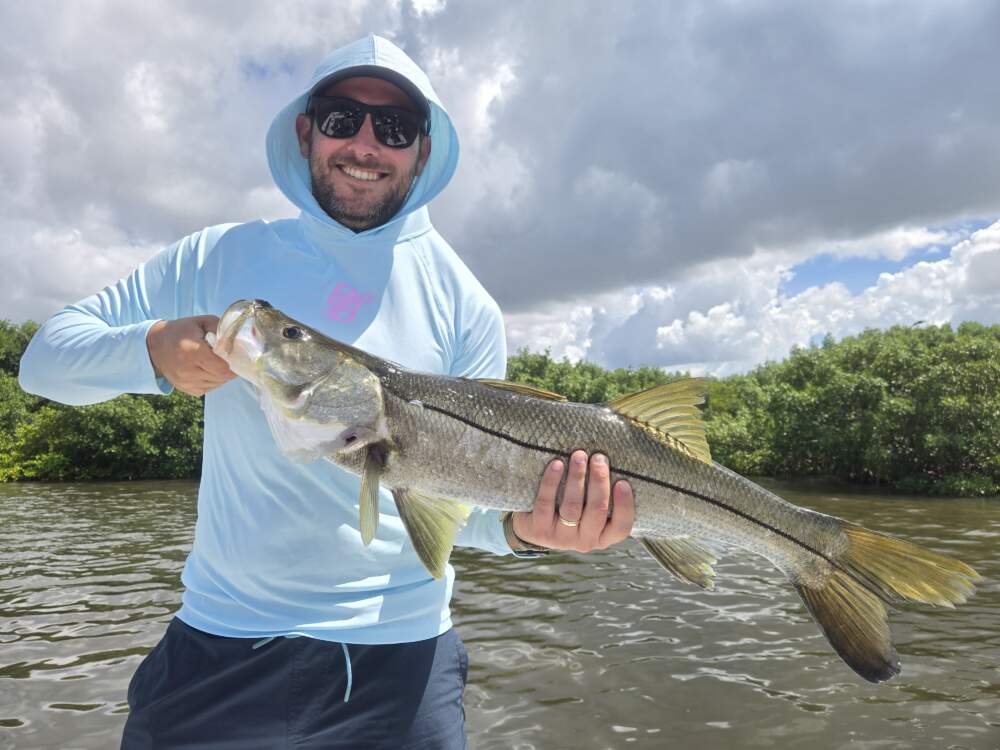
Summer snook feed best where shade, current, and bait intersect. Mangrove points, dock lines, bridge shadow lines, passes, and cuts near deeper water produce when bait gets swept through predictable lanes, which is the same pattern covered in summer snook fishing in Tampa Bay.
- Fish the first two hours of light around mangroves, passes, and dock edges before heat pushes fish tighter to shade or depth.
- Use live pilchards, pinfish, shrimp, soft plastics, or suspending twitch baits placed tight to current breaks.
- Target outgoing tides where bait drains through cuts, creek mouths, and edges between sand and grass.
- Use stronger leader near structure because snook immediately turn toward roots, pilings, and dock posts after the strike.
Redfish on Grass, Oyster, and Mangrove Edges
Summer redfish feed across flats and shoreline edges when water height gives them access to food. Higher tides push reds toward mangroves and oyster edges, while falling water pulls them onto potholes, drains, and grass-to-sand transitions described in Tampa Bay redfish fishing.
- Fish higher water tight to mangroves, oyster edges, and shoreline points where crabs, shrimp, and baitfish concentrate.
- Use cut bait, live shrimp, pilchards, pinfish, gold spoons, or weedless soft plastics depending on water clarity.
- On falling tides, shift to potholes, outer grass edges, and creek drains where redfish stage after leaving cover.
- Keep presentations quiet in clear summer water because pressured redfish refuse noisy boat positioning and heavy splash.
Seatrout on Oxygenated Grass Flats
Summer trout require clean grass, bait, and water movement more than shoreline cover. The best trout water usually has potholes, slight depth changes, and steady current, matching the core habitat described in Tampa Bay seatrout fishing.
- Target grass flats in 3 to 6 feet of water when the tide is moving and bait is visible.
- Use live shrimp under corks, paddletails on light jigheads, suspending twitch baits, or soft jerkbaits over potholes.
- Start shallow at sunrise, then shift toward deeper grass edges as surface temperatures rise.
- Release larger trout carefully by supporting the belly and minimizing air exposure, especially during hot water periods.
Tarpon Around Passes, Bridges, and Travel Lanes
Summer is prime tarpon season in Tampa Bay when adult fish move through passes, bridge zones, channel edges, and bait lanes. Productive tarpon fishing depends on clean drifts, correct bait placement, and reading fish movement, which is the basis of Tampa Bay tarpon fishing charters.
- Focus on sunrise tide changes near bridges, passes, deep edges, and visible rolling fish.
- Use pass crabs, threadfins, pinfish, or other natural baits matched to the fish’s travel lane.
- Drift baits ahead of moving fish instead of casting directly on top of rolling tarpon.
- Use heavy enough tackle to shorten the fight and reduce stress on large fish in warm water.
Summer Fishing FAQs for Tampa Bay
These questions determine trip timing, target selection, gear setup, and realistic expectations for summer inshore fishing around Tampa Bay.
What is the best time of day to fish Tampa Bay in summer?
The best summer window is sunrise through mid-morning, especially when tide movement overlaps low light. Late afternoon can also produce, but storm risk often limits safe fishing time. Midday fishing is least efficient on shallow flats unless current, shade, depth, or bridge structure keeps water cooler and oxygenated.
What fish bite best in Tampa Bay during summer?
Snook, redfish, spotted seatrout, tarpon, mangrove snapper, jacks, and ladyfish are the main summer targets. Tarpon dominate the big-fish program, snook feed heavily around current and shade, trout hold over oxygenated grass, and redfish remain dependable around mangroves, oysters, potholes, and falling-tide drains.
Is live bait or artificial better for summer fishing in Tampa Bay?
Live bait usually produces the highest catch rate for mixed skill groups during summer, especially pilchards, pinfish, shrimp, crabs, and threadfins. Artificial lures work well for accurate anglers covering water at sunrise, around potholes, and along mangrove edges. Water clarity and fish behavior should decide the approach.
How does summer rain affect Tampa Bay fishing?
Summer rain changes salinity, clarity, temperature, and runoff patterns. Light rain can cool shallow water and extend a bite, while heavy freshwater flow may push bait and predators toward stronger tidal exchange, cleaner water, and deeper edges. Lightning is the main operational risk, so storm timing controls trip safety.
Plan a Summer Tampa Bay Fishing Charter
Summer trips should be planned around heat management, tide strength, bait location, and safe storm timing. Bag’Em Fishing Charters structures inshore trips around Tampa Bay’s core warm-water targets, including snook, redfish, spotted seatrout, and seasonal tarpon, using live bait or artificial lures based on the day’s conditions.
For trip format and target species, review Tampa fishing trips and Tampa Bay inshore fishing charters. For lure-focused anglers, the artificial lure fishing page explains common inshore presentations. For logistics, use online reservations or the contact page to match your summer trip to the best tide and target species.