
Last Updated on November 10, 2026 by Eric
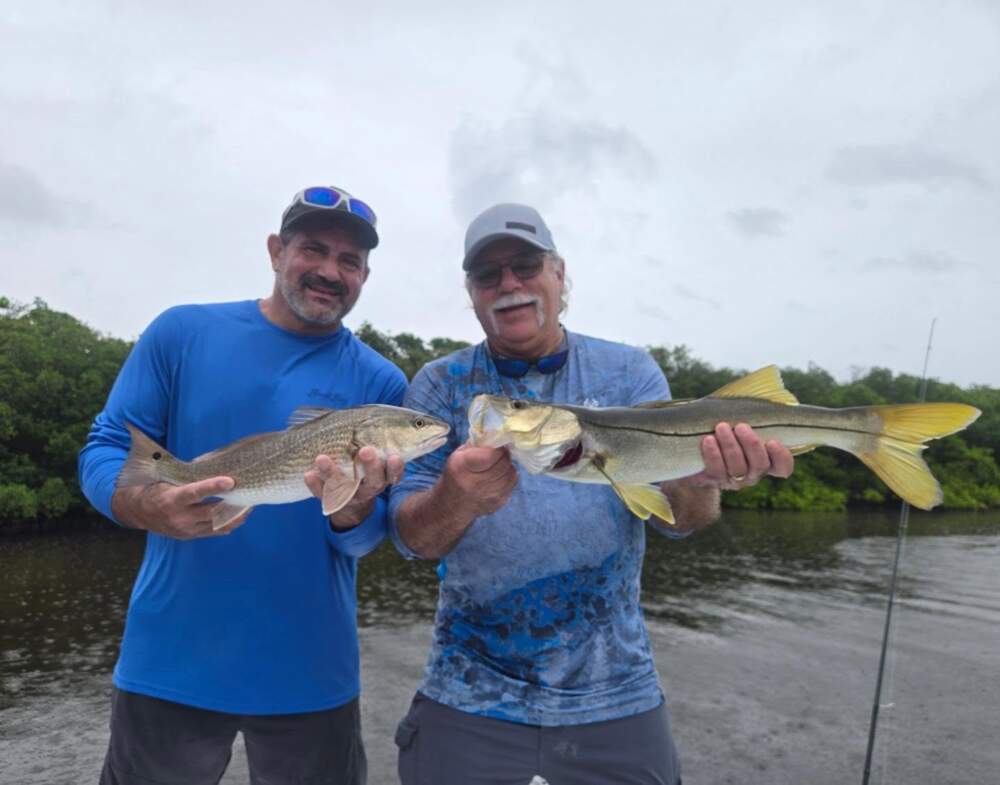
November fishing in Tampa Bay brings redfish on shallow flats, snook moving toward protected water, spotted seatrout around grass and deeper potholes, and black drum feeding near shell and structure. It is a month when a warm afternoon and a cool, breezy morning can call for completely different approaches, even when we are fishing the same part of the bay.
At Bag’Em Fishing Charters, our Tampa Bay inshore fishing trips focus on matching those changing conditions to the right water, bait, and presentation. Live bait gives families and mixed-experience groups a straightforward way to get involved, while artificial lures offer plenty of opportunities for anglers who enjoy making their own casts and working a fish into striking.
The biggest November adjustment is knowing when to leave a familiar pattern behind. A shoreline that produced during a warm stretch may become less productive after a front. A deeper pocket that seemed unnecessary a few days earlier may suddenly hold the fish. Finding that connection between shallow feeding areas and nearby shelter is a major part of fishing Tampa Bay this time of year.
How November Changes the Tampa Bay Fishing Pattern
The transition from October fishing in Tampa Bay into November is gradual rather than automatic. Warm weather can keep fish spread across grass flats and mangrove edges. Stronger cold fronts can bring falling temperatures, changing winds, and water levels that make those same areas fish very differently.
Instead of treating every November trip as a winter fishing trip, we look at what has happened over the previous several days. Has the water been warming or cooling? Is bait still moving across the flat? Is there enough water for fish to reach the shoreline? Those observations tell us more than the month alone.
| Conditions | Where to Focus | Useful Adjustment |
|---|---|---|
| Several mild, stable days | Grass flats, mangrove shorelines, oyster edges, and areas holding bait. | Cover suitable water and watch for feeding activity before slowing down on a particular spot. |
| A temperature drop after a front | Protected creeks, deeper potholes, channel edges, and structure near deeper water. | Keep presentations close to the fish and reduce retrieve speed when they are reluctant to chase. |
| Lower-than-expected water | Drains, sandy cuts, outside edges, and depressions connecting shallow habitat to deeper water. | Fish the available depth rather than forcing access to a shoreline that is nearly dry. |
| Clear, calm water | Visible grass transitions, potholes, and shallow feeding routes. | Approach quietly and place casts ahead of fish instead of directly on top of them. |
| A warming period after a cool morning | Shallow feeding areas close to deeper holding water. | Revisit promising shallows as conditions improve instead of judging the entire day by the first stop. |
Redfish
Redfish fishing in Tampa Bay remains a strong reason to plan a November trip. Grass flats, oyster edges, mangrove shorelines, and sandy openings all deserve attention, but the amount of water covering that habitat determines where we can expect fish to feed.
On higher water, redfish may work close to mangrove roots and shoreline cover. As the water falls, the better opportunity often shifts toward the nearest drain, pothole, or outside edge. Rather than repeatedly casting into shallow water that no longer holds fish, work the routes they use to leave it.
Live shrimp and cut bait provide useful options when redfish are feeding close to the bottom. Weedless paddletails, shrimp imitations, and spoons let us search larger stretches of suitable habitat. The presentation should match the fish’s behavior: a cruising redfish may respond to a swimming lure, while a fish rooting along the bottom may need something placed quietly within its feeding path.
Visible fish also require restraint. Give them room, avoid unnecessary boat noise, and make the first cast count. Finding a group of redfish does not help much if the approach pushes them out of casting range.
Snook
November keeps Tampa Bay snook fishing firmly in the plan, but their locations become increasingly tied to temperature and shelter. During mild weather, mangrove points, docks, seawalls, and creek mouths can still produce. As stronger fronts arrive, protected canals, deeper creek sections, and other sheltered areas become more important.
That movement is not a complete overnight evacuation of the flats. Some fish remain near familiar cover while others move farther into protected habitat. We pay particular attention to places where a feeding shoreline connects to a deeper channel or basin, giving snook access to both food and more stable conditions.
Live bait drifting naturally beside cover can be effective, while shrimp imitations and paddletails offer controlled presentations around docks and mangrove edges. After a temperature drop, repeatedly pulling a lure past the fish at summer speed may be less effective than slowing down and keeping it within reach.
As the season progresses, finding warmer water for snook becomes increasingly important. We also adjust tackle to the structure and the size of the fish, rather than using a light setup that cannot keep a hooked snook away from pilings or mangrove roots.
We encourage catch-and-release snook fishing, including during an open harvest season. A careful release is part of a successful trip, not an afterthought.
Spotted Seatrout
Spotted seatrout fishing gives us another useful November option, particularly for groups that enjoy drifting productive water and making repeated casts. Grass flats, sandy potholes, and nearby channels provide several places to look without committing the entire trip to one shoreline.
During mild conditions, trout may feed over grass and along shallow transitions. Following a stronger cooling period, deeper holes and protected channels deserve a closer look. The important adjustment is not simply fishing deeper everywhere, but finding depth near the habitat and food the fish are already using.
Live shrimp beneath a float can help newer anglers present a bait over grass without constantly snagging vegetation. Soft-plastic jigs and suspending twitchbaits give experienced anglers more control over depth and retrieve speed. When the bite is subtle, longer pauses and a slower presentation are worth trying before changing locations.
Once we find a productive stretch, a controlled repeat drift is often more useful than continuing across empty water. Trout need gentle handling, so we keep release time brief and avoid unnecessary contact with dry surfaces.
Black Drum
Black drum add another possibility around oyster habitat, shallow bars, and suitable structure. Their feeding style calls for a different approach than casting fast-moving lures for snook or searching a flat for trout.
Shrimp and pieces of crab presented on or near the bottom are useful choices. Give the fish time to locate the bait, and resist the urge to move it constantly. When drum are feeding in a concentrated area, careful placement can matter more than covering a large amount of water.
They are not a guaranteed stop on every charter, but they give us another option when the conditions and the group’s interests line up.
Low Water Can Concentrate Fish, but It Changes Access
November fishing requires paying attention to the water that is actually in the bay, not just the predicted tide height. Wind and other weather effects can raise or lower observed water levels relative to astronomical tide predictions. NOAA explains those differences in its guidance on tide predictions and weather-driven water levels.
For fishing, lower water can make certain locations easier to read. Fish lose access to flooded shoreline cover and may become more concentrated along drains, depressions, and deeper edges. The same conditions can also make navigation more restrictive.
We approach these areas with enough room to fish without pushing the boat across shallow grass or disturbing the fish. A low-water opportunity is only useful when there is a safe route in and out.
Timing matters here, too. After a cool night, the shallowest water may not be the best first stop. Fishing a deeper edge early and checking nearby shallows after they have warmed can make more sense than repeating a midsummer schedule.
Live Bait or Artificial Lures for a November Charter?
Both approaches belong in the November plan. The right choice depends on the group’s experience, how much casting everyone wants to do, and how the fish are responding.
Live Bait for Families and Mixed-Experience Groups
Live-bait fishing is a practical choice when some guests are experienced and others are learning. It lets us focus on bait placement, recognizing a bite, and fighting the fish without requiring everyone to master a particular lure retrieve first.
This is also a good fit for a family outing during a November visit to Tampa. Tell us the ages of any children joining the trip and whether the priority is learning, species variety, or working toward a particular catch.
Artificial Lures for Anglers Who Want to Cast
Our artificial lure fishing charters suit anglers who enjoy reading the water, making accurate casts, and adjusting their own presentations. We recommend one to three anglers for this style of trip.
A paddletail can search grass edges efficiently. A shrimp imitation offers a quieter presentation around shallow redfish or dock cover. A suspending twitchbait lets us pause the lure near a pothole or depth change. Topwater plugs remain an option when conditions and feeding activity support them, rather than something we force into every morning.
The most useful adjustment is often presentation rather than a completely different lure. Changing the retrieve speed, adding a pause, or selecting a jig head that keeps the bait at the right depth can make the same offering more effective. Our approach to fall lure fishing in Tampa Bay centers on those practical changes.
November Fishing Regulations for Tampa Bay
The following summary reflects recreational harvest rules checked on November 10, 2026. Snook, redfish, and spotted seatrout rules below apply to the Tampa Bay management region. Always review the linked FWC regulations before keeping fish, including any emergency changes or location-specific restrictions.
| Species | November Harvest Status | Key Limits |
|---|---|---|
| Snook | Open through November 30. The winter harvest closure begins December 1. | 28 to 33 inches total length; one fish per person per day. |
| Redfish | Open year-round. | 18 to 27 inches total length; one fish per person per day, with a two-fish vessel limit. |
| Spotted seatrout | Open year-round. | 15 to 19 inches total length; three fish per person per day. One fish over 19 inches may be kept per vessel, included within the bag limit. |
| Flounder | Closed throughout November. The annual closure runs October 15 through November 30. | No harvest during the closure, which applies in Florida state waters and adjacent federal waters. |
Captain and crew may not retain their own bag limits of snook, redfish, or spotted seatrout while on a for-hire trip. The oversized seatrout allowance is one per vessel, not one for every guest.
Legal harvest is only one part of the experience. We encourage responsible releases, and no trip should be planned around a promise of filling a cooler.
What to Bring and Where We Meet
We provide fishing gear, tackle, bait, and iced bottled water, and guests are covered under the captain’s fishing license. Bring your preferred food and additional drinks, sunscreen, polarized sunglasses, and a hat.
November clothing should work for both a cool boat ride and a warmer stretch of fishing. A removable layer and a wind-resistant jacket are useful, especially around a front. Wear non-marking shoes, avoid boots or dark-soled footwear, and keep personal belongings compact.
Our main launch locations include the Courtney Campbell Causeway Boat Ramp and the Gandy Boulevard Boat Ramp. Captain Bucky confirms the meeting location and start time based on the fishing, weather, and trip arrangements. Review our charter preparation details before heading to the ramp.
Protected inshore water provides options, but it does not make every windy day suitable for a charter. We assess the route and conditions rather than assuming a sheltered fishing spot guarantees a comfortable or safe trip across the bay.
November Tampa Bay Fishing FAQs
Is November a good month for fishing in Tampa Bay?
Yes. Redfish, snook, spotted seatrout, and black drum provide several inshore possibilities. The most productive approach depends on recent temperatures, water levels, bait, and the timing of cold fronts.
Do November fishing trips need to start at sunrise?
Not always. Early fishing can be productive during mild weather, but a cool morning may favor deeper water first and shallower feeding areas later. We confirm departure times around the tides, conditions, and trip availability.
Can you catch an inshore slam in November?
Snook, redfish, and spotted seatrout are all November targets, so catching all three on the same trip is possible. It is a goal rather than a guarantee, and we adjust the day to the opportunities available.
Does a cold front stop the fishing?
A front can change fish location, feeding activity, water levels, and boating conditions. It does not automatically eliminate the bite, but it may require a different route, slower presentations, or rescheduling when conditions are unsafe.
Are November charters suitable for children and beginners?
Yes. Live-bait inshore trips can accommodate families and guests with different experience levels. Let us know who is coming and the ages of any children so we can prepare appropriately.
Book a November Fishing Trip With Bag’Em Fishing Charters
November offers several ways to enjoy Tampa Bay, from working a shrimp along an oyster edge to casting a lure toward a redfish or drifting live bait past snook cover. The best trip starts with a clear idea of what your group enjoys and enough flexibility to fish the conditions in front of us.
Join Captain Bucky for an inshore trip built around your experience level, preferred fishing style, and the season’s opportunities.
Plan your November day on the water: Reserve your Tampa Bay fishing charter, call or text 407-977-7650, or contact Captain Bucky to discuss your group and available dates.