Last Updated on January 14, 2026 by Eric
Inshore fishing in the Tampa Bay Area comes down to shallow water, steady tidal exchange, and a mix of bottom types that shift how fish position themselves over the course of the year. The Bay itself looks enormous on a chart, but fish don’t always treat it that way. Once winter settles in, they use less water, favor the same depths and edges, and show up in familiar places when conditions line up.
As we head into 2026, the same mechanics apply. Fish slide based on water movement, they settle in where temperatures stay tolerable, and they hold close to structure once things stabilize. When those pieces line up, days come together quickly. When they don’t, the bay can feel empty even though the fish are still there, just tucked into fewer places.
So today, let’s take a look at what fishing Tampa Bay is like at the start of the year, what our local winter conditions push fish to do, and what you can look forward to as the year progresses.
How Tampa Bay’s Inshore System Is Laid Out
Before we talk about species, seasons, or lures, it helps to better understand the water you’re fishing. Especially in this specific part of the Sunshine State, because Tampa Bay isn’t a single piece of water that behaves the same everywhere.
Tampa Bay spans roughly 400 square miles, depending on how boundaries are defined.* It functions as a shallow estuary connected directly to the Gulf. Saltwater enters through the mouth of the bay while freshwater drains in from rivers, creeks, and residential canals. That constant exchange produces a range of salinity and temperature conditions across the system. It’s a wide, shallow system with sections that warm, drain, and refill at different speeds, which is why a stretch of water can fish well one day and feel empty the next.
*Most scientific, environmental, and fisheries sources put it in the roughly 390–400 square mile range, including open water but excluding some fringe wetlands.
Most inshore fishing in Tampa Bay happens around grass flats, mangrove shorelines, oyster bars, and a mix of docks, bridges, and other man-made structure. In a lot of places, the depth changes are pretty slight, and sometimes a few inches is all that separates dry bottom from fishable water. So naturally, small contour shifts start to matter as the tides move.
Channels cut through the bay and give fish somewhere to settle when water pulls off the flats during falling tides or colder stretches. As water drains, fish slide toward that depth and hold there. When it pushes back in, they move right back out, using the same edges and transitions they’ve used before.
Winter Conditions and Fish Location
During winter, water temperatures drop enough to influence how long fish remain shallow. Cold mornings tend to push fish toward deeper water, protected shorelines, and areas with darker bottom that absorb heat during the day.
As the sun rises, shallow areas warm first, especially mud-bottom flats and protected grass edges. Redfish, trout, and drum’ll often move back onto these areas during afternoon windows when water temperatures stabilize.

Bait presence decreases during extended cold periods. As a result, fish feed more selectively and hold tighter to structure. Slower presentations keep baits in front of fish longer and produce more consistent bites than fast-moving approaches.
Grass Flats and Bottom Transitions
Grass flats make up a big chunk of Tampa Bay’s inshore water, and they hold life year-round. Florida baitfish, shrimp, and small crabs live in that grass, which is why predators never really abandon it, even during winter.
What changes in colder months isn’t whether fish use the flats, but how they use them.
Instead of roaming the middle, most fish slide toward edges where depth, current, and bottom transitions give them some options. Sand potholes, grass lines, and subtle drops act like built-in stopping points. When water moves, trout and redfish often sit on the down-current side of these features and let food come to them. They don’t have to chase much. A small change in bottom or a clean edge between sand and grass is usually enough to hold fish when the tide is doing the work.
As water levels rise again, those same fish ease back onto nearby flats, spreading out just enough to feed without giving up access to depth.
Mud-bottom areas play a bigger role in winter than a lot of fishermen expect. Mud absorbs heat faster than sand, and on clear days it can raise water temperatures just enough to pull fish shallow earlier than surrounding areas. After a cold night, those spots often come alive first, especially late morning into early afternoon. It’s rarely dramatic, but it’s consistent, and consistency is what keeps winter trips moving forward instead of feeling like guesswork.
Mangrove Shorelines and Protected Edges
Mangrove shorelines give fish a place to settle when conditions tighten up. They break some of the wind, soften the current, and stay usable no matter how high or low the water gets. Snook and redfish work these edges like ambush lanes, especially where mangroves meet drains, creeks, or deeper pockets that funnel water. Those intersections tend to reload throughout the day as tides shift. Fish slide out during colder periods, then move back toward the shade line once the water warms and bait starts to show again. In winter, fish usually sit just off the mangroves in slightly deeper water, close enough to slide in when temperatures come up but far enough out to stay comfortable through cold stretches.
Now, I will say that how you approach mangroves matters more in winter than it does in summer. Clear water and calm conditions make fish easier to spook. Keeping the boat off the shoreline, moving in quietly, and working casts parallel to the edge lets baits stay in front of fish longer without blowing them out. It’s a slower way to fish, but it holds together better over the course of the day, especially when the bay isn’t giving up many second chances.
Target Species
Redfish
(Sciaenops ocellatus)
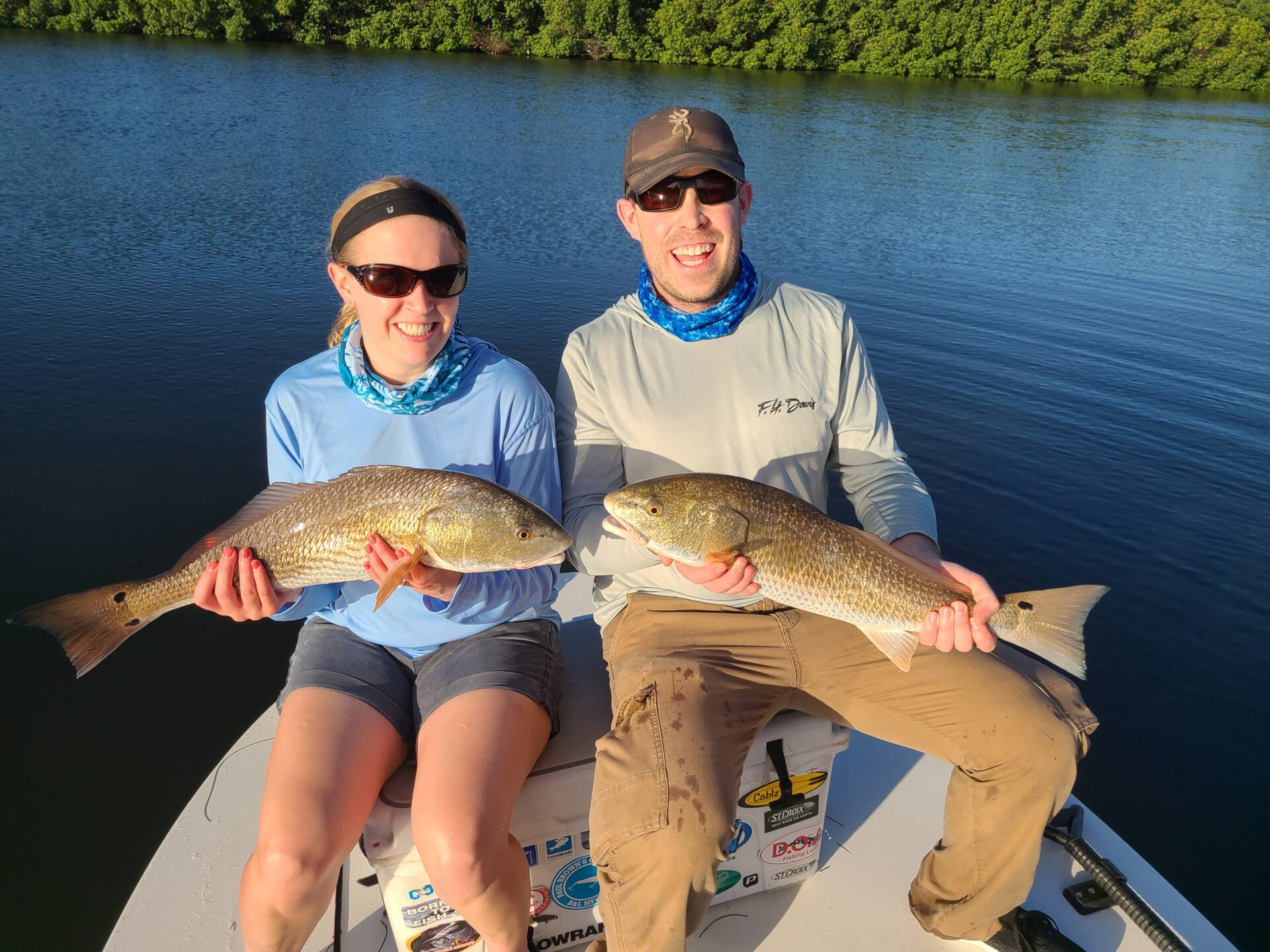
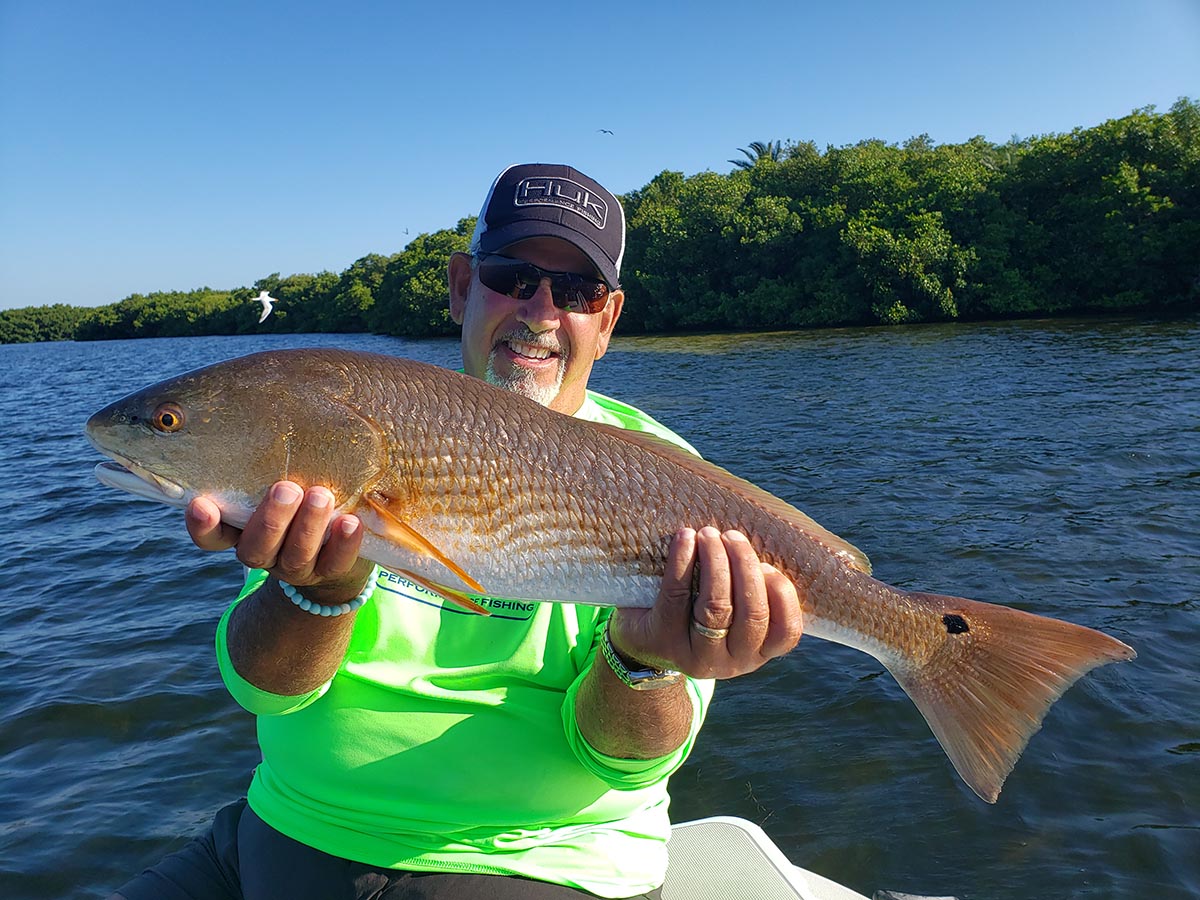
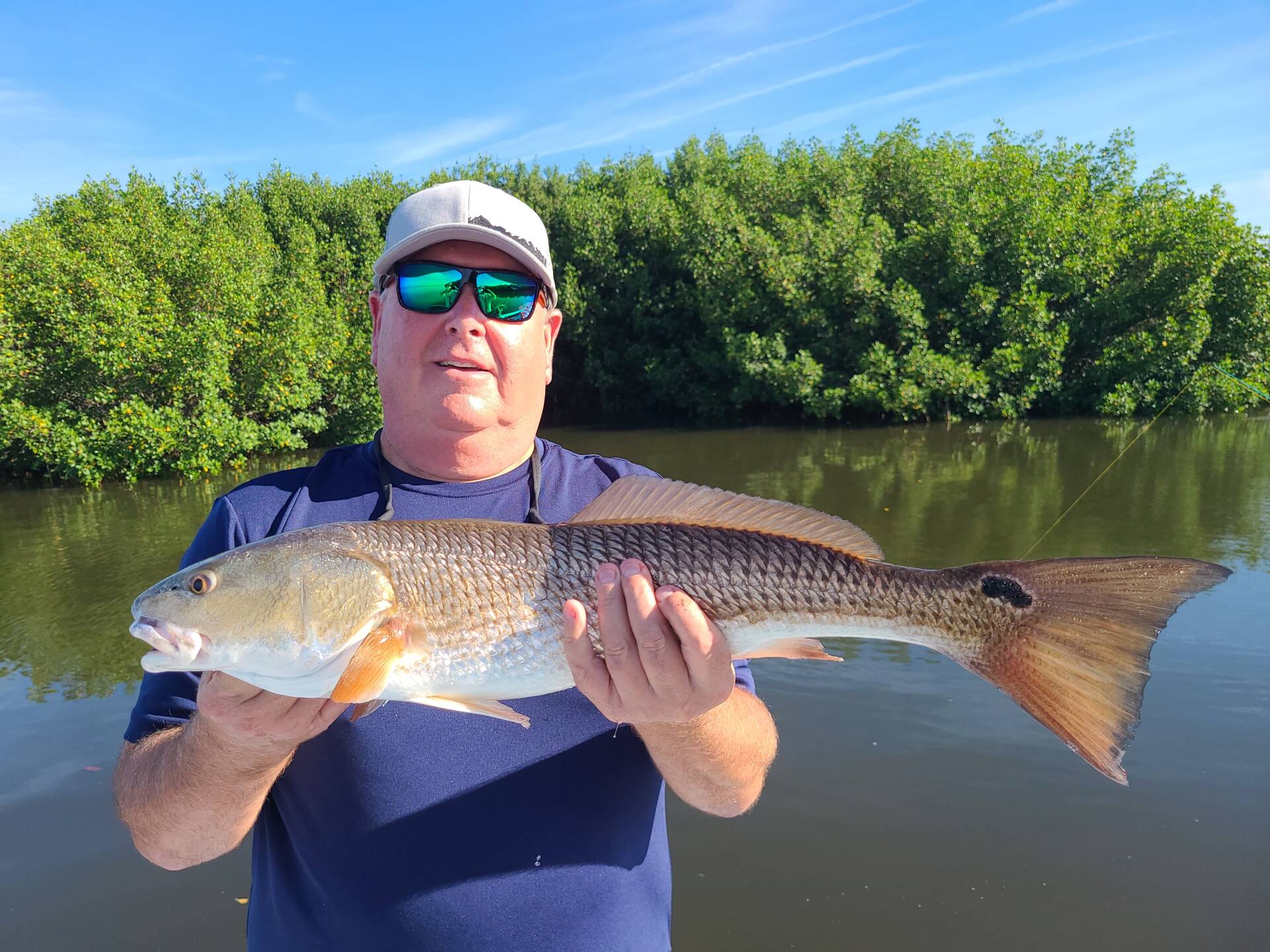
Redfish are one of the most reliable winter targets for inshore fishing charters in Tampa, and they don’t disappear when water temperatures drop — they just tighten up. Through colder months, they often form smaller, more deliberate schools and use the bay’s shallow flats during the warmest parts of the day. In places like the interior flats off Old Tampa Bay, Terra Ceia, and the back edges of the lower bay, redfish slide shallow once the sun has had time to work on the bottom.
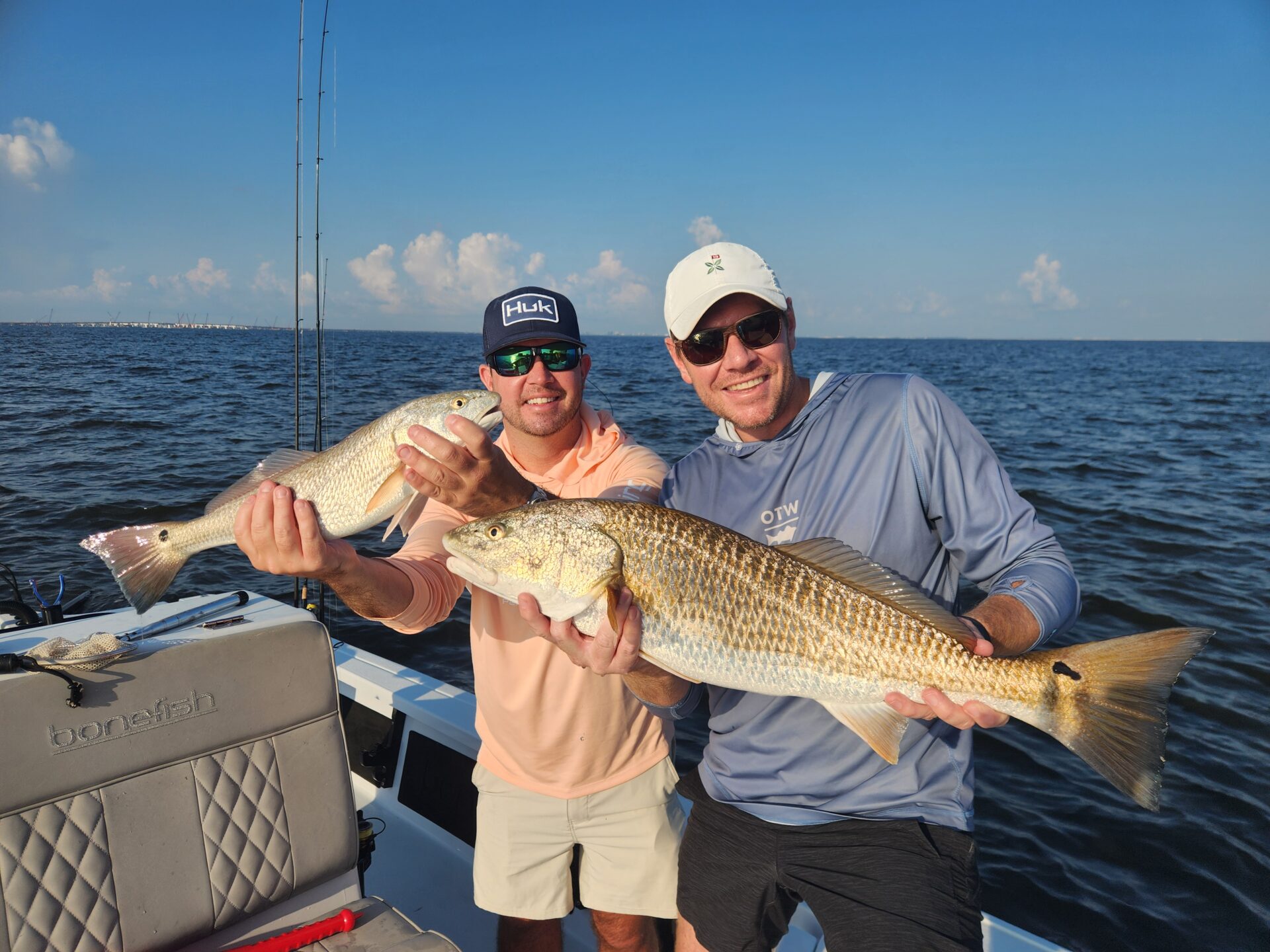
When water starts moving, those same fish reposition along oyster edges, grass lines, and slight depth changes where current delivers food without forcing them to roam. You’ll often find them set up on the down-current side of these edges, especially where mud and shell meet. Live shrimp and cut bait draw steady bites when fish are settled in. When schools are spread out, soft plastics and gold spoons let you cover water efficiently. When they’re packed in tight, quieter presentations tend to hold the bite longer, especially in clear winter water.
Winter Redfish Positioning
In colder months, redfish in Tampa Bay stop roaming wide flats and start favoring edges that let them adjust quickly. They spend mornings closer to depth, then slide onto shallow flats with darker bottom once the sun has had time to warm the water. Oyster-lined transitions and grass edges near mud flats tend to reload first on calm, sunny days.
Snook
(Centropomus undecimalis)
Snook are still around in winter, but they’re far less forgiving about where they spend their time. Cold-sensitive by nature, they shift toward deeper, more temperature-stable water across Tampa Bay. Residential canals, deeper mangrove pockets, and protected basins in areas like Apollo Beach, Cockroach Bay, and the back reaches of the bay consistently hold fish during cold spells.
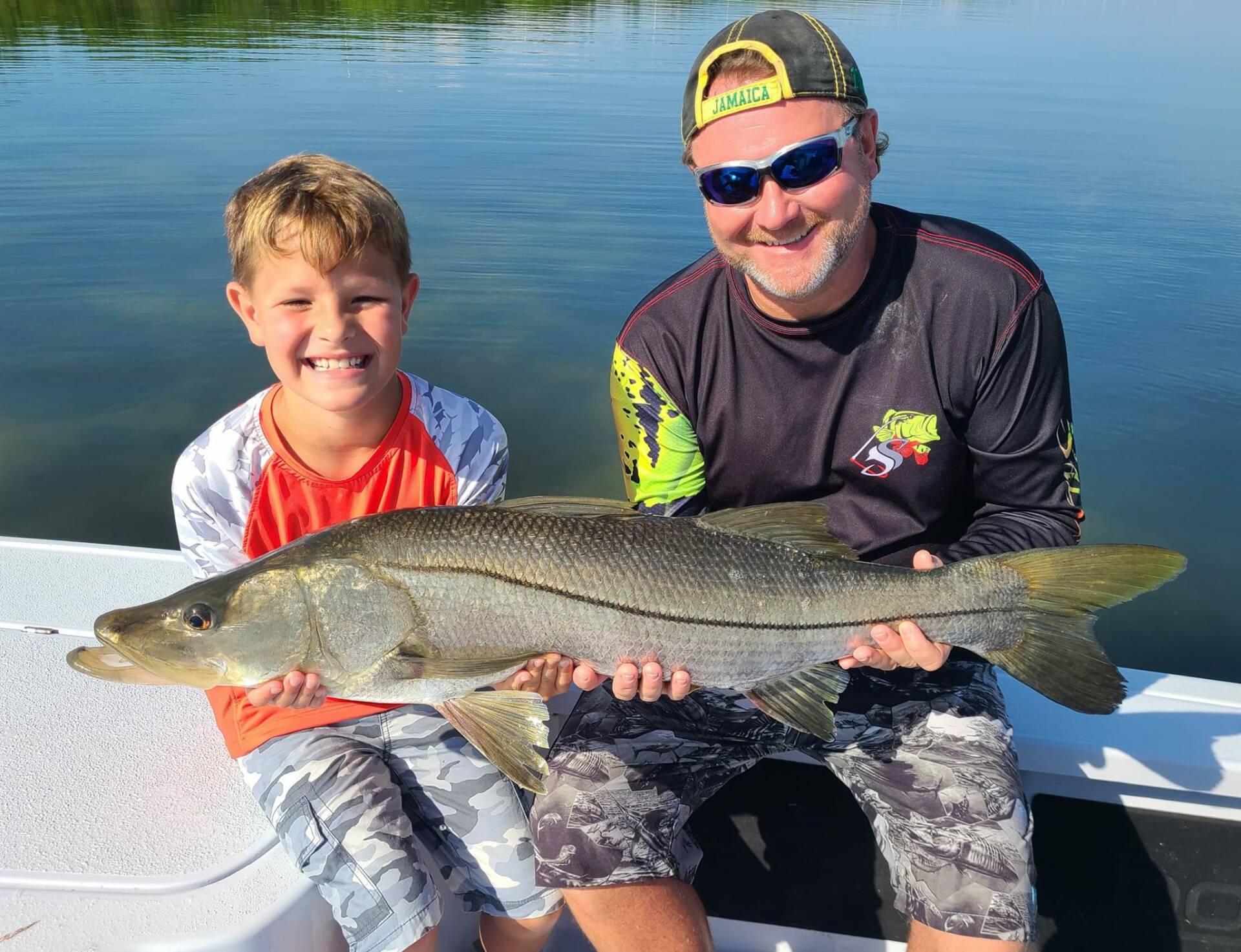
Snook typically sit just off structure rather than right on it, using depth as insurance when temperatures drop overnight. Live bait fished slowly near seawalls, mangroves, or canal bends remains the most dependable approach. Artificial lures work when they’re kept low and deliberate, especially along drop-offs and edges where snook can slide up to feed without committing to shallow water for long.
Where Snook Hold During Cold Spells
When temperatures drop, snook pull out of open flats and settle into areas that don’t swing as hard overnight. Residential canals, deeper mangrove pockets, and protected basins with steady depth give them room to slide up and down without committing shallow. These fish often sit just off structure, close enough to feed but far enough to retreat if water cools again.
Spotted Seatrout
(Cynoscion nebulosus)
Winter pushes spotted seatrout into more predictable positions throughout Tampa Bay. Instead of roaming open flats, trout settle along deeper grass edges, sand potholes, and channels where water temperature stays consistent. In places like the middle bay grass systems and the deeper edges near Egmont Key approaches, trout often sit still and let food come to them.
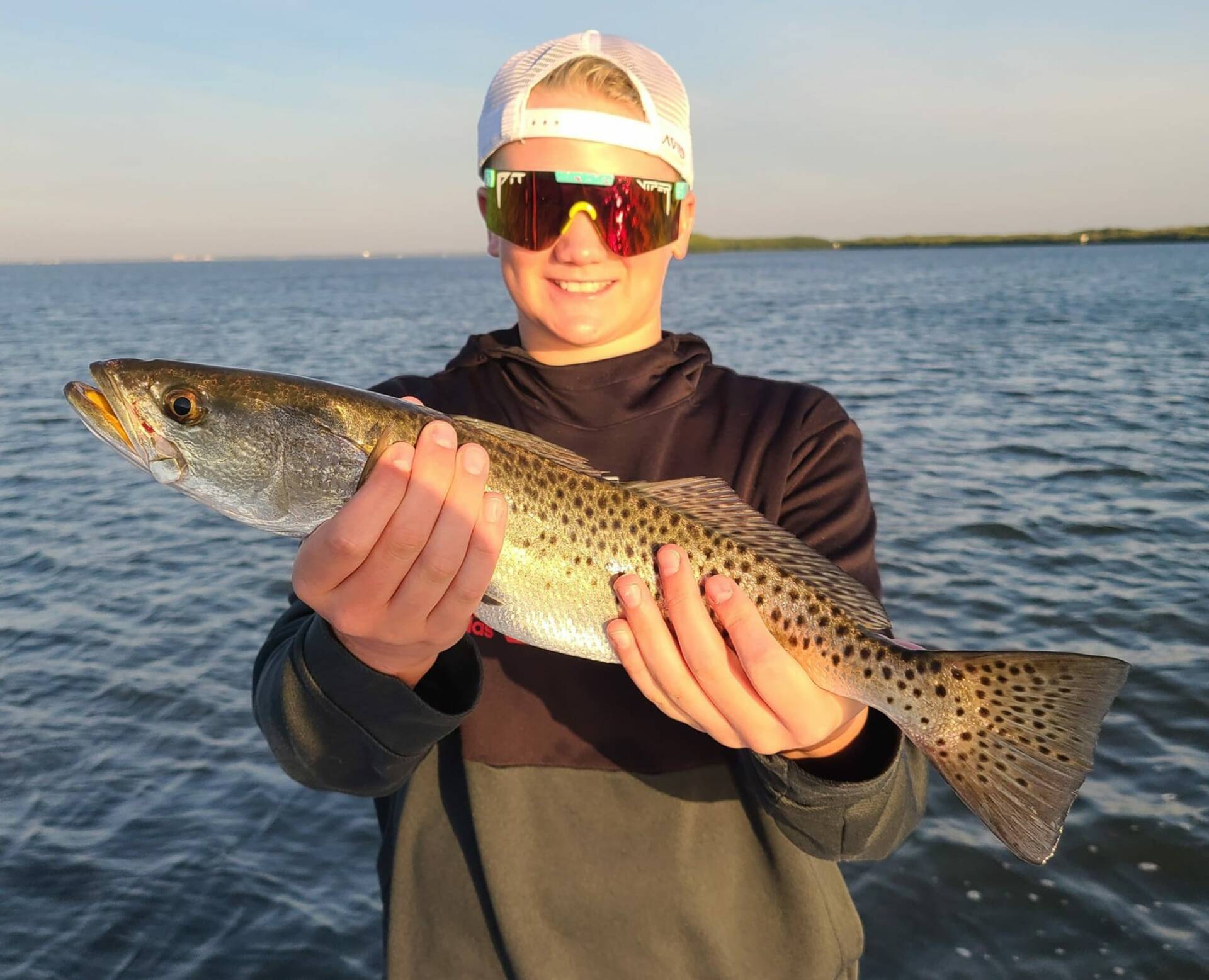
They rarely chase in cold water. Most strikes come from fish holding tight to bottom features and reacting to passing baits. Soft plastics worked slowly, suspending twitch baits, and live shrimp under a cork all produce when kept in the strike zone long enough. When trout are present, bites often come in clusters, followed by quieter stretches that reward patience rather than speed.
Sheepshead
(Archosargus probatocephalus)
Winter marks peak season for sheepshead in Tampa Bay as they gather around structure to spawn. Docks, bridge pilings, rock piles, and oyster bars all hold fish, especially in areas with steady tidal flow like the Skyway approaches, lower bay bridges, and residential dock lines throughout Old Tampa Bay.
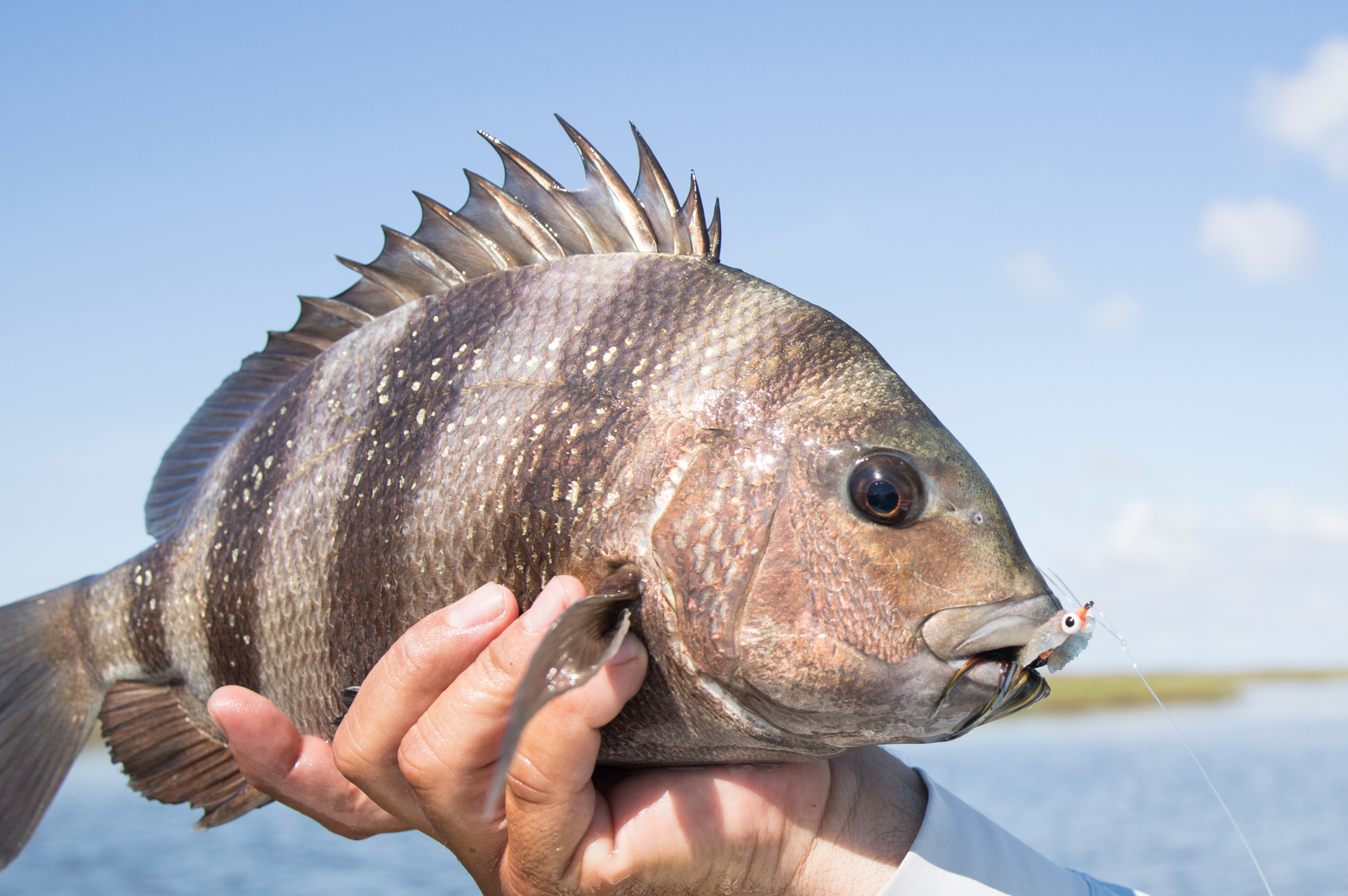
Sheepshead feed tight to structure and rarely move far to eat. Precision matters more than volume. Fiddler crabs and shrimp fished on small hooks near pilings and rocks produce consistent bites. Light tackle helps detect subtle takes, which often feel more like pressure than a strike. In Tampa Bay sheepshead fishing can stay steady even when other species slow down.
Sheepshead Winter Setup
Sheepshead concentrate around fixed structure during winter, especially where current moves consistently. Bridge pilings, dock lines, rock piles, and oyster bars become staging areas as fish gather to spawn. They hold tight to the structure itself, rarely straying far, which makes precise presentations more important than covering water.
Black Drum
(Pogonias cromis)
Black drum become more noticeable in Tampa Bay during winter, with larger fish moving into deeper channels, bridge areas, and hard-bottom zones. Schools often stage near structure where shrimp and crabs concentrate, particularly along deeper edges of the bay and around bridge spans.
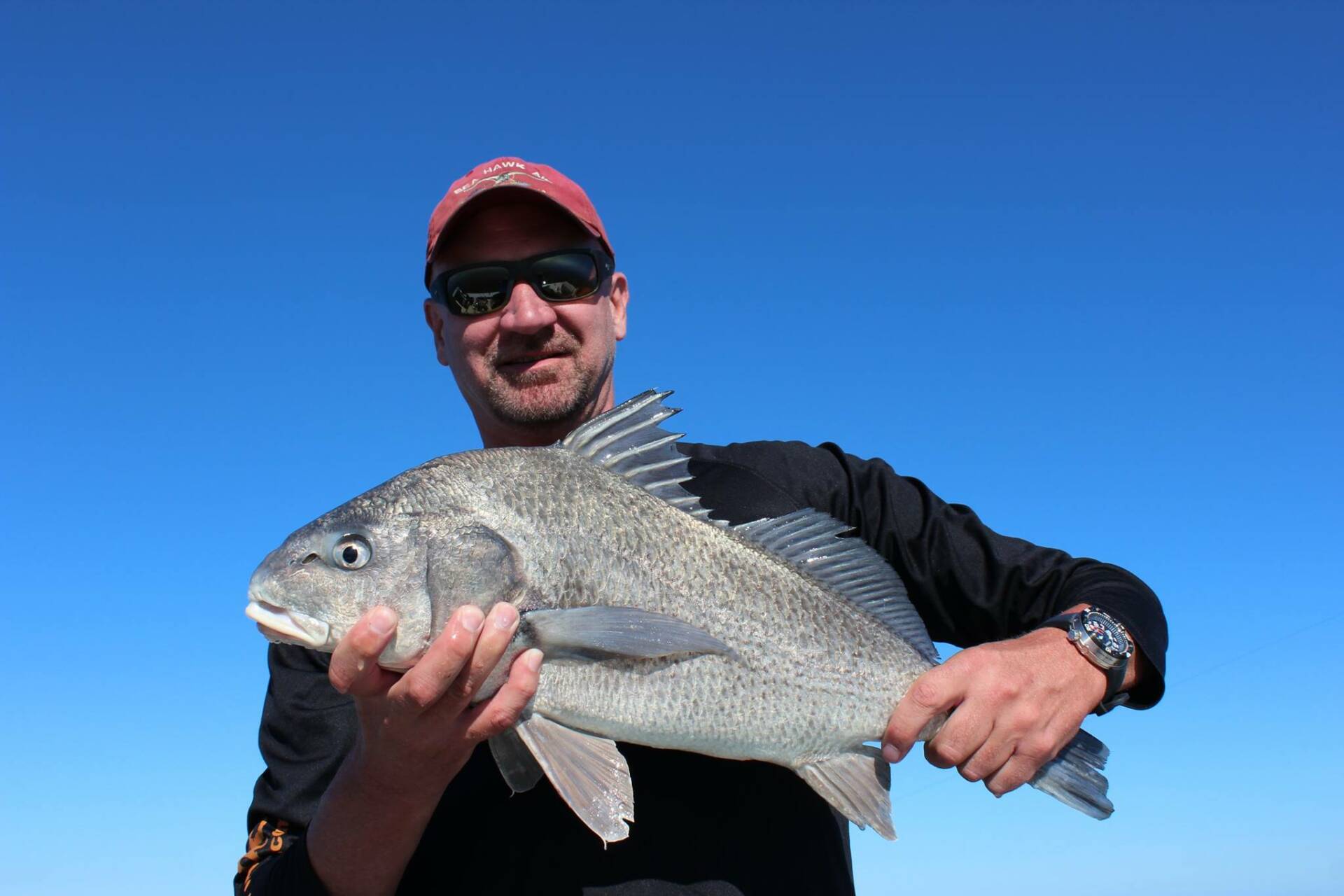
Shrimp, crab, and cut bait all work well when fished near the bottom. When drum are present, bites tend to come fast and close together, followed by long pauses once the school moves on. Hookups are usually solid and deliberate, and fights are more about steady pressure than speed.
| Month | Primary inshore targets | Secondary targets | Places they hold in Tampa Bay | Notes |
|---|---|---|---|---|
| Jan | Redfish, Spotted seatrout, Sheepshead | Black drum, Flounder, Snook (select areas) | Deeper grass edges, potholes, channels; mangrove edges with nearby depth; docks/bridges/rock for sheepshead; drains on low water | Live shrimp, small crabs, cut bait; slow plastics; suspending twitchbaits; work outgoing tides to drains; midday sun warms mud/black bottom |
| Feb | Sheepshead, Redfish, Spotted seatrout | Black drum, Flounder, Snook (warm pockets) | Bridge pilings, docks, rock/oyster; trout on deeper grass + potholes; redfish on sun-warmed flats near edges; snook in canals/basins | Fiddlers/shrimp tight to structure; steady bottom contact; slow retrieves; target stable weather windows after fronts |
| Mar | Spotted seatrout, Redfish, Snook (increasing) | Spanish mackerel (near bay mouth), Mangrove snapper (structure), Pompano (select edges) | Trout spread onto grass flats; redfish along oyster/grass lines; snook along mangrove edges, canals, creek mouths; faster action near passes as bait returns | Shrimp and scaled-down lures early; start mixing paddletails, jerkbaits; popping cork + shrimp on grass edges; watch water clarity shifts with spring winds |
| Apr | Snook, Redfish, Spotted seatrout | Spanish mackerel, Mangrove snapper, Jack crevalle | Grass flats and lanes; mangrove points and creek mouths; docks/bridges for snapper; passes and edges for mackerel | Live pilchards/whitebait (when available); paddletails on jigheads; walk-the-dog topwater at first light; drift grass with moving water |
| May | Snook, Spotted seatrout, Redfish | Tarpon (near bay mouth/bridges), Mangrove snapper, Spanish mackerel | Snook on points, docks, mangrove shorelines; trout on deeper grass edges midday; redfish on oyster/grass transitions; tarpon along channels, passes, bridge lanes | Whitebait/chumming patterns; freelined baits around structure; early topwater; scale leader to clarity; keep lures moving in warmer water |
| Jun | Snook, Tarpon (inshore lanes), Mangrove snapper | Redfish (early), Spotted seatrout (deeper), Shark (inshore), Cobia (occasional) | Snook on docks, seawalls, passes; tarpon along deeper edges and travel corridors; snapper on bridges and hard structure; trout deeper grass/potholes | Live bait dominates (pilchards/threadfins/crabs as applicable); fish dawn/dusk for shallow work; midday goes deeper with shade/flow |
| Jul | Snook, Mangrove snapper, Redfish (windows) | Spotted seatrout (deep), Jack crevalle, Ladyfish | Shade + current: docks, bridges, mangrove cuts; redfish on early shallow flats and late flood edges; trout on deeper grass and troughs | Short feeding windows; keep baits in moving water; use heavier jigheads when current is strong; prioritize oxygenated water and flow |
| Aug | Snook, Mangrove snapper, Redfish | Spotted seatrout (deep), Flounder (start improving), Shark | Edges with flow; mangrove shorelines near deeper pockets; snapper stacked on structure; flounder on sandy edges near passes/creeks | Live bait or precise artificials in shade lines; fish around storms carefully (water color changes); target outgoing tides for bait movement |
| Sep | Redfish, Snook, Flounder | Spotted seatrout, Jack crevalle, Spanish mackerel (near mouth) | Redfish along oyster/grass edges; snook at creek mouths and passes; flounder on sandy drop-offs and channel edges; trout on grass + potholes | Mix live bait with paddletails/jerkbaits; work drains on falling water; bump jigs along bottom for flounder |
| Oct | Redfish, Spotted seatrout, Snook | Flounder, Spanish mackerel, Black drum (increasing) | Cooling water expands fishable flats; trout on grass edges and lanes; redfish in schools along shorelines and oyster seams; snook transition from passes back inside | Topwater improves early/late; shrimp returns to menu; steady retrieves and pause work; match lure size to bait present |
| Nov | Spotted seatrout, Redfish, Black drum | Sheepshead (starting), Flounder, Snook (warm edges) | Trout tighten to potholes and deeper grass; redfish on sun-warmed flats near depth; drum on hard bottom and channels; sheepshead showing around docks/bridges | Slow down; shrimp and cut bait excel; suspending baits for trout; fish the warm part of the day after cool nights |
| Dec | Redfish, Spotted seatrout, Sheepshead | Black drum, Flounder, Snook (deep pockets) | Deeper edges, channels, drains; sheepshead tight to structure; redfish on darker flats during warming windows; trout on potholes and troughs | Live shrimp, fiddlers, cut bait; work outgoing tides; keep presentations near bottom; clear water calls for longer leaders and quieter approaches |
Tips
Conditions
Tides & Water Movement
Tidal movement repositions fish throughout the bay. Incoming tides allow fish to access shallow flats and mangroves. Outgoing tides pull fish toward edges, drains, and channels.
When the water pulls out hard in winter, fish don’t have many places left to go, and that makes the bay smaller in a hurry. These conditions make structure and contour changes easier to identify and fish more predictably.
Wind & Weather Effects
Wind direction influences water level and clarity. Sustained wind can stack water into certain sections of the bay or accelerate drain-out during falling tides.
Cold fronts temporarily push fish into deeper water and protected areas. Stable conditions following a front typically produce improved feeding activity once water temperatures rebound.
Gear & Presentation
- Light to medium spinning setups handle most Tampa Bay inshore fishing.
- Braided line improves sensitivity, while fluorocarbon leaders reduce abrasion near structure.
- During winter, slower retrieves keep baits within the strike zone longer and match reduced fish activity levels.
Navigation
Tampa Bay contains shallow flats, shifting sandbars, and submerged structure. Bottom contours change over time due to storms and tidal movement.
Current GPS mapping and navigation charts reduce the risk of running aground and help identify safe travel routes, particularly during low water conditions.
Shallow-draft boats access more water safely. Kayaks and wading allow fishermen to reach productive areas quietly on calm days.
Protecting the Fishery
Seagrass beds support bait and juvenile fish and should be avoided when running boats. Circle hooks reduce injury during catch-and-release fishing. Remember, manatees and dolphins are common throughout Tampa Bay and should be given space to avoid disturbance.
Booking Tampa Fishing Charters with a Local Guide
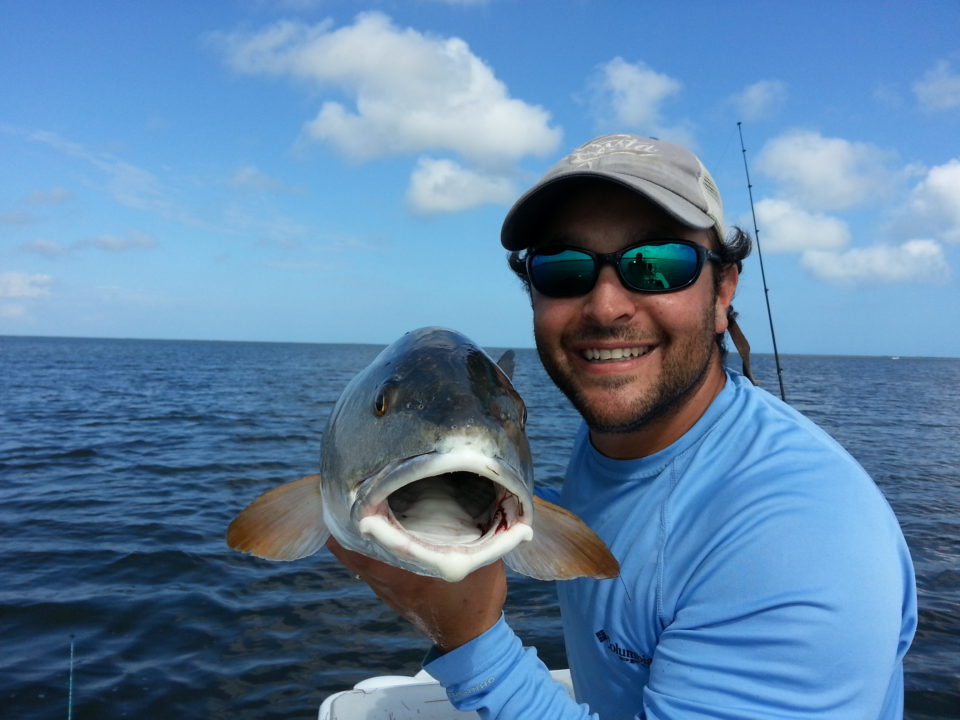
The best Tampa fishing trips depend on reading conditions rather than relying on fixed locations. Local experience shortens the learning curve by accounting for daily changes in water level, temperature, and clarity.
Bag’em Charters, operated by Captain Bucky, focuses on inshore trips built around current conditions. Most trips focus on snook, redfish, and spotted seatrout, using live bait or artificials depending on conditions and what you want out of the day. Licenses are covered under the captain, and trips are set up to work for families, first-timers, and experienced fishermen alike.
To book an inshore fishing trip in Tampa, call or text 407-977-7650—or click here to reserve your trip online!