Last Updated on April 15, 2026 by Eric
April in Tampa Bay is a spring inshore fishery driven by warming water, larger bait schools, and longer feeding windows. This guide solves three problems: where fish relocate first, which tide and wind combinations raise catch rates, and how to separate snook, redfish, seatrout, and early tarpon patterns without wasting water. It is built for anglers who already cast accurately and want higher percentage decision making. Beginners can still apply it on a guided trip, but the biggest gain comes from disciplined boat positioning, tide timing, and bait selection. Expect consistent inshore action on stable weather windows, with late April tarpon opportunities when temperature, bait, and current align.
April System Variables That Actually Control the Bite
April catch rates in Tampa Bay are controlled by five variables: water temperature, tide height, tidal speed, wind direction, and bait density. Ignore one, and the bay spreads fish across too much water. Match all five, and the same shoreline, flat, or pass can produce through multiple tide stages.
| Variable | April Signal | Fish Response | Tactical Adjustment |
|---|---|---|---|
| Water Temperature | 68 to 71 degrees after fronts | Trout and redfish hold deeper edges; snook stay close to cover | Start in 3 to 6 feet, then move shallow once the sun stabilizes the flat |
| Water Temperature | 72 to 75 degrees on stable weeks | Snook stage on current seams; trout spread over grass; reds roam shorelines | Fish mixed inshore patterns instead of committing to one species |
| Warm Spell Range | 75 to 78 degrees late month | Tarpon become realistic; mackerel and snapper improve near the lower bay | Add passes, bridges, beaches, and lower-bay travel lanes to the plan |
| Outgoing Tide | Low water and visible drainage | Bait concentrates in potholes, troughs, and creek mouths | Highest percentage for trout, lower-water reds, and structure fish |
| Incoming Tide | Mid to high water over mangrove edges | Redfish and snook gain shoreline access and feed tighter to cover | Work mangrove corners, oyster seams, and shoreline points |
| Wind and Clarity | Afternoon sea breeze or dirty open flats | Fish slide to cleaner lee banks, canals, and protected shorelines | Shift away from exposed grass and fish the cleanest moving water available |
Tackle in April needs a two-system loadout: one setup for coverage over grass and edges, and one for precision around cover. Trying to force the same leader, lure weight, and bait size across open flats, oyster seams, docks, and passes cuts efficiency fast.
- Flats outfit: 7-foot medium spinning rod, 10 to 15 pound braid, 15 to 20 pound fluorocarbon leader for trout and open-water redfish.
- Cover outfit: 7-foot 6-inch medium-heavy spinning rod, 15 to 20 pound braid, 30 to 40 pound fluorocarbon leader for snook, docks, mangroves, and heavier current.
- Lure baseline: 1/8 to 1/4 ounce jigheads, 3 to 5 inch paddletails, suspending twitch baits, and spoons for shallow redfish water.
- Natural bait baseline: live sardines, threadfins, shrimp, and cut ladyfish or mullet when redfish refuse artificials.
Operational takeaway: fish the cleanest moving water that holds bait, then scale leader strength and presentation speed to the depth and cover directly in front of you. April rewards sequencing and punishes random running.
Four April Patterns Worth Building Trips Around
April does not fish as a single pattern. The month separates into four repeatable situations, and each one asks for different positioning, leader strength, and bait speed. Serious anglers do better by committing to the dominant condition instead of bouncing between open flats, dock lines, and passes without a plan.
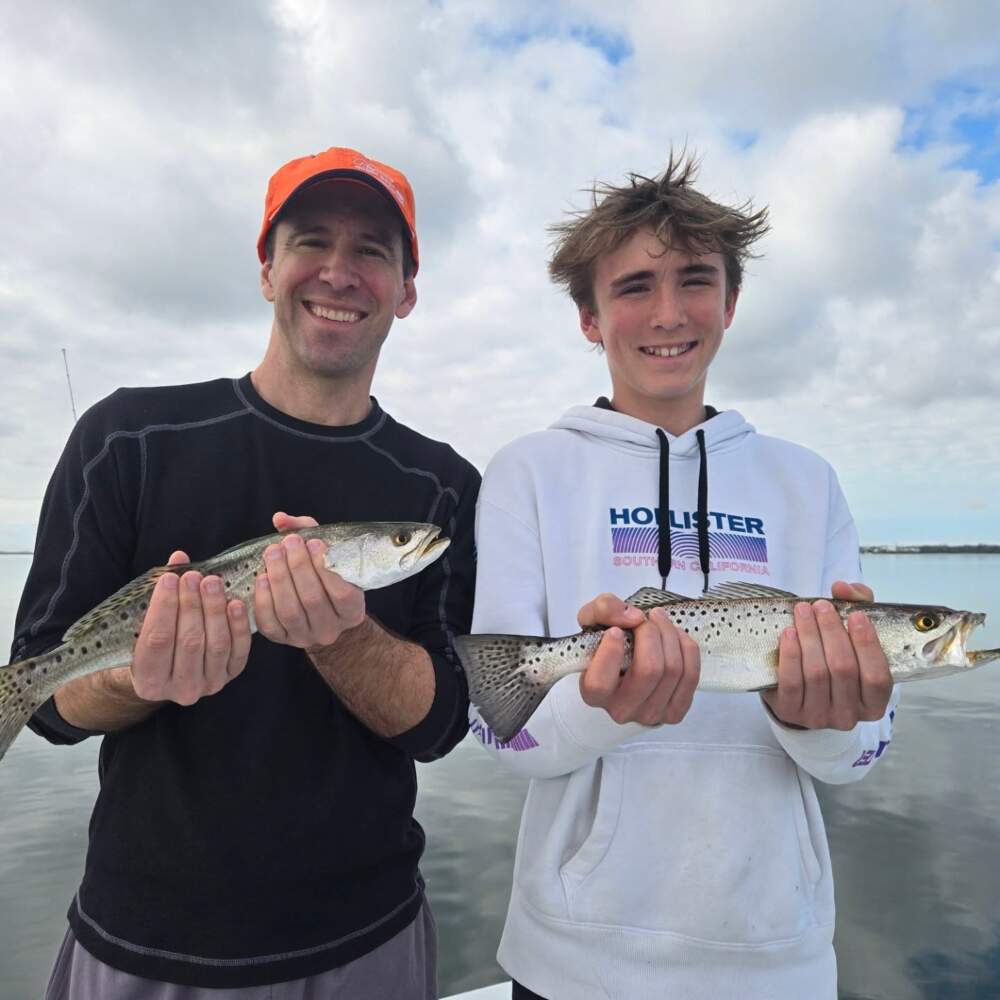
Low-Light Trout Over Grass and Potholes
The first clean moving tide over mid-depth grass is the easiest high-volume April pattern. Seatrout spread back over open grass once the water holds in the low seventies, but bigger fish still use potholes and trough edges as feeding lanes. That behavior lines up with spring trout movement across Tampa Bay grass flats whenever bait, clean water, and light chop overlap.
- Work 2 to 5 feet of water on grass flats with adjacent 4 to 7 foot troughs.
- Start with 1/8 ounce jigheads and 3 to 4 inch paddletails, or fish a live shrimp 24 to 30 inches under a cork.
- Use 15 to 20 pound fluorocarbon leaders; lighter leaders matter in clear water and moderate sun.
- Drift with the tide, not across it, and re-cast pothole edges until the school resets.
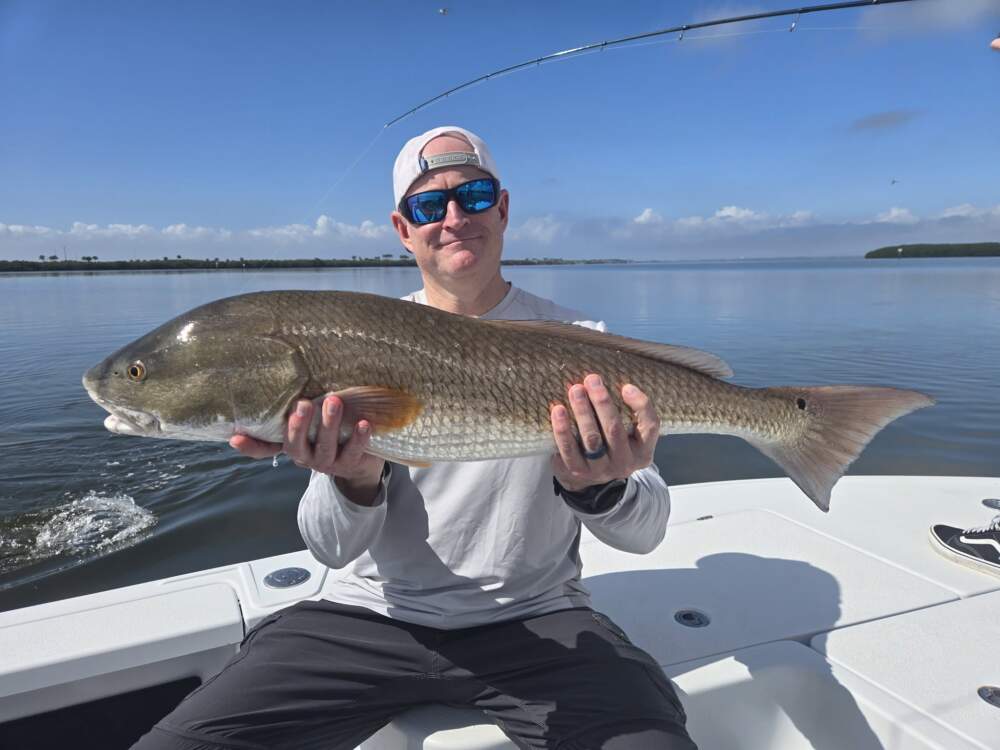
Midday Redfish on Flooded Mangroves and Oyster Transitions
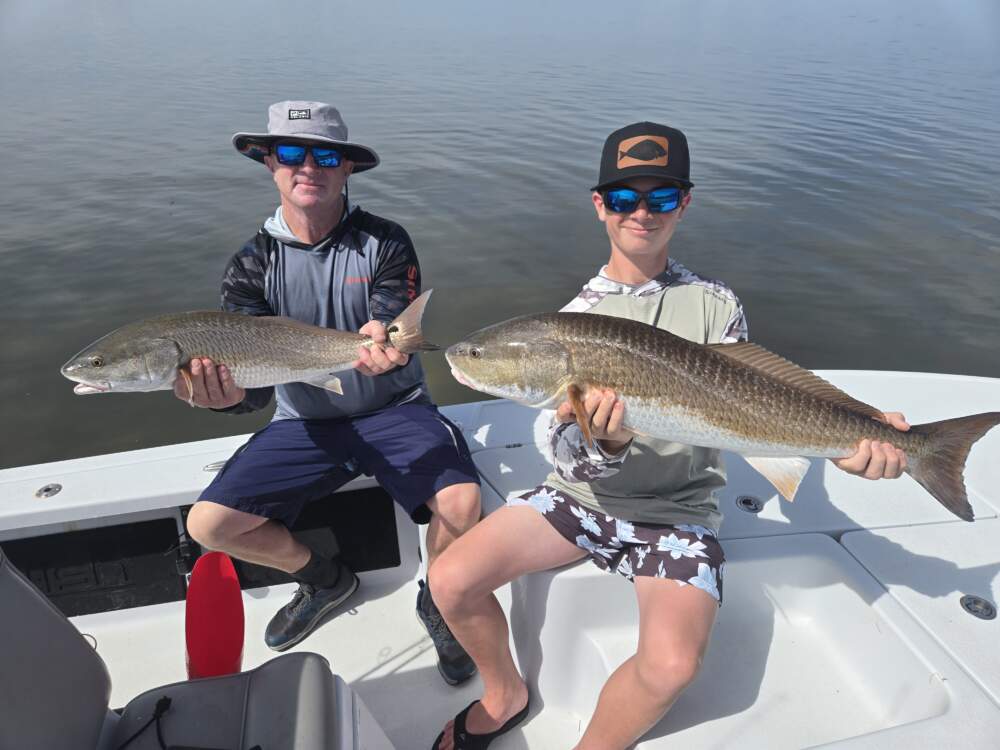
Redfish improve as soon as the incoming tide gives them shoreline access. April reds do not need extreme heat; they need enough water to move from drains and troughs onto mangrove corners, oyster seams, and sand-grass transitions. The highest percentage positioning usually mirrors wind driven redfish placement on spring shorelines, especially on protected banks with bait present.
- Target 1 to 3 feet of water on the last half of the incoming tide and first part of the outgoing tide.
- Throw 4 inch weedless paddletails, quarter-ounce gold spoons, or cut ladyfish when fish refuse artificials.
- Use 20 to 30 pound fluorocarbon around oysters; go heavier only when dock structure becomes part of the drift.
- Make longer casts on clear afternoons and watch for pushes, wakes, and bait scattering tight to the bank.
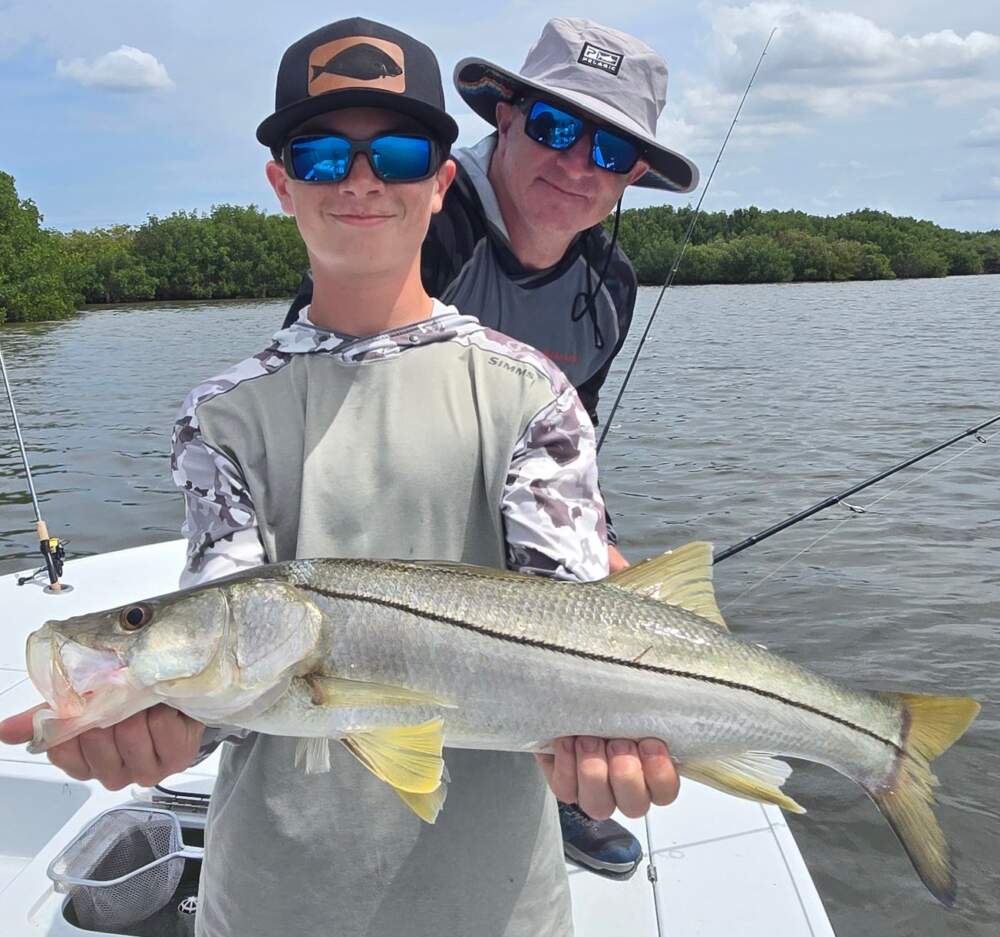
Snook on Current Seams, Docks, and Mangrove Cuts
Snook become an April priority when stable water reaches the low seventies and bait schools pin to cover. They stop acting like winter holdovers and begin using dock shade, mangrove points, small creek mouths, and canal exits as feeding stations. The clearest version of that behavior is the April snook staging pattern around moving water and hard cover, where current direction matters more than spot names.
- Fish 3 to 8 feet of water around docks, points, and shoreline cuts with steady tidal flow.
- Use 30 to 40 pound fluorocarbon leaders and medium-heavy tackle when barnacles, pilings, or mangrove roots are in play.
- Free-line live sardines or threadfins when bait is thick; use 4 to 5 inch twitch baits or paddletails when covering water.
- Set up up-current and make repeated casts through the same seam rather than fan-casting every direction.
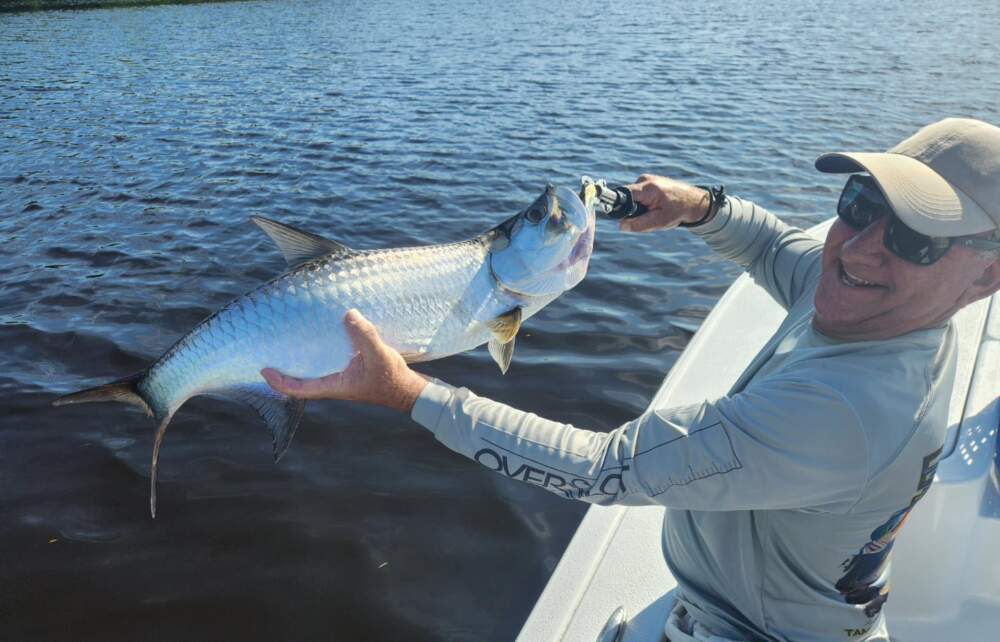
Late April Tarpon on Passes, Bridges, and Travel Lanes
Late April is the first point where tarpon become a planned target instead of a bonus sighting. The fish are not distributed evenly, and the bite still hinges on bait, current strength, and clean travel lanes near the lower bay. Anglers who understand tarpon staging lanes during the early migration window stop wasting time on dead bridge spans and empty beaches.
- Focus on water temperatures roughly 75 to 78 degrees, strong moving water, and visible bait schools near passes or bridges.
- Use heavy spinning or conventional tackle with 50 to 80 pound leader matched to current speed and structure.
- Present live threadfins, pass crabs, or larger baitfish naturally; artificial lures become a lower percentage tool once tarpon key on live forage.
- Plan around tide change, sunrise, and the first calm weather windows after sustained wind.
April rewards specialization. The biggest mistake is treating trout, redfish, snook, and tarpon as if they share the same water on the same tide. They do not. Build the day around one dominant pattern, then expand only when the conditions justify it.
April Fishing Questions Serious Tampa Bay Anglers Actually Ask
Most April mistakes come from timing errors, not casting errors. These are the planning questions that change trip outcomes before the boat leaves the ramp.
Is April better for a mixed inshore trip or a tarpon-specific trip?
Early April favors mixed inshore fishing. Snook, redfish, and seatrout remain reliable across multiple tide stages, while tarpon are still inconsistent. Late April shifts the balance. If water temperatures hold in the mid seventies and bait schools are established near passes or bridges, a tarpon focused trip becomes realistic there.
Which tide produces the highest April catch rate in Tampa Bay?
No single tide wins every day. Outgoing water concentrates bait and favors trout, redfish on lower flats, and structure fish. Mid to high incoming water improves shoreline access for redfish and snook. The April window is strong tidal movement with clean water, stable wind, and enough depth for your target.
Live bait or artificials in April: which produces more fish?
Live bait usually produces the higher catch rate once spring bait schools are established, especially for snook and April tarpon. Artificial lures remain highly effective for seatrout, redfish, and scouting new water. Choose lures when covering water matters most, then switch to live bait when fish position predictably around current.
Can one April charter effectively target snook, redfish, trout, and tarpon?
One full charter can cover snook, redfish, and trout if tide progression supports each pattern and travel time stays short. Adding tarpon usually reduces efficiency because tarpon demand heavier tackle, bigger bait, and different water. In late April, split the day only when tarpon signs are already confirmed before departure.
Planning an April Trip with Bag’Em Fishing Charters
Bag’Em Fishing Charters runs April trips around the strongest part of the spring inshore fishery first, then expands into early tarpon opportunities when bait, tide, and weather align. Most days center on Tampa Bay inshore fishing charters for snook, redfish, and seatrout, with late month adjustments tied to seasonal tarpon charters. For month-by-month planning beyond this article, the 2026 inshore calendar gives the broader seasonal framework.
Use the trip overview to compare formats, secure dates through online reservations, or coordinate target priorities and launch details through the contact page. Anglers fishing aboard the charter are covered under the captain’s license. For trip prep, see the FAQ page and boat details. Captain Bucky works Tampa Bay, St. Pete Clearwater, and Tarpon Springs. Phone: 407-977-7650. Email: bagemfishing@gmail.com.